 English
 Español

Hard hats are one of the most recognizable pieces of personal protective equipment on any job site, yet they’re also one of the most misunderstood. Many head injuries occur not because protection wasn’t worn, but because the wrong type or class of hard hat was selected for the hazards present.
This Hard Hat Classification Guide goes beyond surface-level definitions. It explains how ANSI hard hat types and classes function in real-world environments, how OSHA hard hat requirements are applied in practice, and why modern job sites are increasingly moving toward Type 2 hard hats and safety helmets. If you’ve ever wondered which hard hat do I need for my job, this guide is designed to give you a clear answer.
Type 1 VS Type 2 Hard Hats: What’s the Real Hard Hat Classification Difference?
Understanding the difference between type 1 VS type 2 hard hats is essential, because these classifications protect against very different injury scenarios. Check out this blog post on Type 1 and Type 2 hard hats to learn even more.
Type 1 Hard Hat Classification: Top-Impact Protection
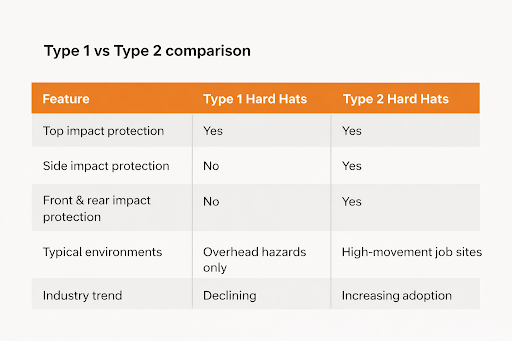
Type 1 hard hats are designed to protect against vertical impacts only. They absorb force from objects falling directly onto the top of the head, such as tools or debris dropped from above. This design reflects older job site risks where overhead hazards were the primary concern.
While Type 1 hard hats still meet ANSI standards, they offer limited protection in environments where movement, equipment, or tight workspaces increase the likelihood of side impacts.
Type 2 Hard Hat Classification: Top and Lateral Impact Protection
Type 2 hard hats are engineered to protect against both vertical and lateral impacts, including blows to the sides, front, and back of the head. Their internal construction distributes force more effectively during off-center impacts, which are common on modern job sites.
As work environments have become more dynamic, Type 2 protection has gained traction across construction, utilities, and industrial applications.
When Type 2 Protection Becomes Necessary
OSHA does not explicitly mandate Type 2 hard hats, but employers are required to protect workers from all recognized hazards. When lateral impact risks exist, such as working near moving machinery, structural elements, or elevated platforms, Type 2 protection is often justified through risk assessment.
ANSI Hard Hat Classes Explained: Class E, G, and C
Impact protection is only one part of the equation. ANSI hard hat classes explained refers to the level of electrical protection a hard hat provides.
Class G Hard Hats (General Duty)
Class G hard hats provide dielectric protection up to 2,200 volts. They are commonly used in construction and industrial environments where low-voltage exposure may be present but is not the primary hazard.
Class E Hard Hats (Electrical)
Class E hard hats offer the highest level of electrical protection, rated up to 20,000 volts. These are intended for high-voltage environments such as utility work, substations, and power transmission.
Class C Hard Hats (Conductive)
Class C hard hats provide no electrical protection, but they meet the same impact standards as other classes. They are often vented, making them a popular choice in hot environments where electrical hazards are not present.
A common misconception is that Class C hard hats are inherently less safe. In reality, they are purpose-built for specific conditions where comfort and ventilation matter most.
Class E vs Class G Hard Hats: Which One Is Right for Electrical Work?
The decision between class E vs class G hard hats depends on the nature of electrical exposure, not just the presence of electricity.
When Class G Is Sufficient
Class G protection is often appropriate when electrical exposure is incidental or controlled, such as on general construction sites where low-voltage systems exist but are not the primary focus of work.
When Class E Is the Better Choice
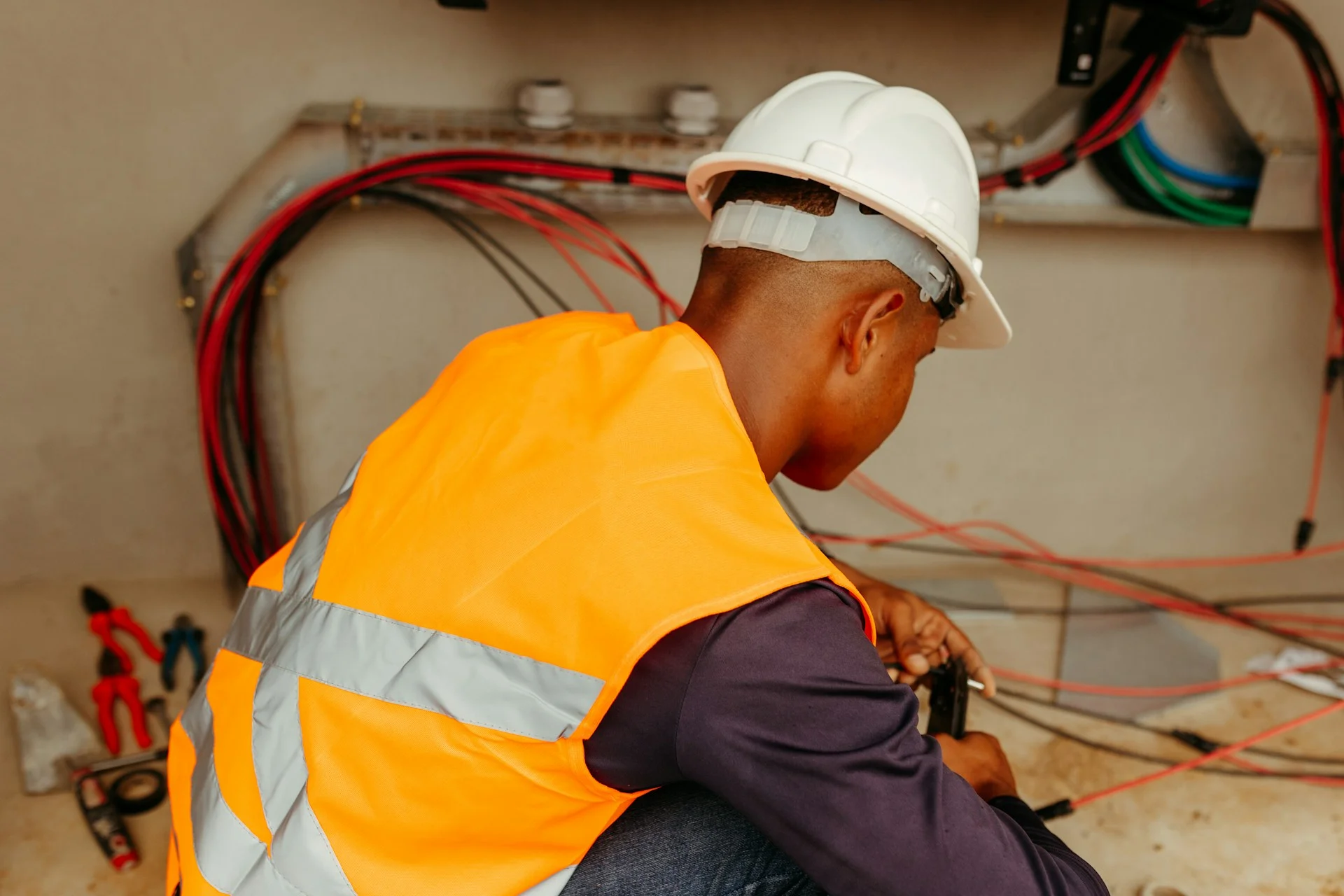
Class E hard hats are essential when workers are routinely exposed to high-voltage sources. Electricians, linemen, and utility crews benefit from the added insulation these helmets provide.
It’s important to remember that electrical ratings apply only to head protection. A Class E hard hat does not replace other electrical PPE such as insulated gloves or arc-rated clothing.
How to Choose the Right Hard Hat for Your Job Site
When asking which hard hat do I need for my job, the answer should always begin with a job-specific risk assessment.
Job Role and Work Conditions
Construction and manufacturing roles often require a balance of impact and electrical protection, making Type 2 Class G hard hats a common solution. Electrical and utility work frequently demands Type 2 Class E protection due to higher voltage exposure and complex movement.
Environmental Factors That Matter
Heat, confined spaces, UV exposure, and moisture all influence hard hat performance. Comfort plays a critical role, if a hard hat is uncomfortable, it’s more likely to be worn incorrectly or removed.
Fit, Stability, and Retention
Proper suspension adjustment and shell sizing ensure that protection stays in place. In active environments, chin strap compatibility becomes increasingly important for maintaining protection during movement or falls.
In many of these situations, safety helmets outperform traditional hard hats by offering improved stability, lateral protection, and integrated retention systems.
Modern Hard Hat Standards: Lateral Impact, Chin Straps, and Safety Helmets
Hard hat standards continue to evolve alongside job site realities.
Why Lateral Impact Protection Matters
Real-world injury data shows that many head injuries result from side or off-center impacts. Type 2 hard hats and safety helmets address this risk by reducing rotational forces and secondary impacts.
The Role of Chin Straps in Modern PPE
Chin straps are no longer optional accessories. They help ensure that head protection stays in place during falls, sudden movements, or vibration, especially in elevated or mobile work environments.
When to Upgrade to Safety Helmets
Safety helmets meeting standards like EN 12492 combine Type 2 impact protection, secure retention, and accessory compatibility. For many modern job sites, upgrading to helmet-style PPE offers a measurable safety advantage.
FAQs About Hard Hat Classification

Are Type 2 hard hats required by OSHA?
OSHA does not explicitly require Type 2 hard hats, but employers must protect against all recognized hazards. When lateral impact risks exist, Type 2 protection may be necessary to remain compliant.
Can Class C hard hats be vented?
Yes. Class C hard hats are often vented and are commonly used in hot environments where electrical hazards are not present.
When should a hard hat be replaced?
Most manufacturers recommend replacing the shell every five years and the suspension annually, or immediately after any significant impact.
Final Thoughts
Hard hat classification isn’t about choosing the most familiar option, it’s about choosing protection that matches real conditions. Understanding type 1 vs type 2 hard hats, knowing how ANSI hard hat classes are explained, and making informed decisions between class E VS class G hard hats helps reduce risk before an incident occurs.
At TPR Industrial, the focus is on supporting smarter safety decisions with accurate information and dependable equipment. When head protection is selected intentionally, job sites are safer, more compliant, and better prepared for the realities of modern work.
Hard hats are one of the most recognizable pieces of personal protective equipment on any job site, yet they’re also one of the most misunderstood. Many head injuries occur not because protection wasn’t worn, but because the wrong type or class of hard hat was selected for the hazards present.
This Hard Hat Classification Guide goes beyond surface-level definitions. It explains how ANSI hard hat types and classes function in real-world environments, how OSHA hard hat requirements are applied in practice, and why modern job sites are increasingly moving toward Type 2 hard hats and safety helmets. If you’ve ever wondered which hard hat do I need for my job, this guide is designed to give you a clear answer.
Type 1 VS Type 2 Hard Hats: What’s the Real Hard Hat Classification Difference?
Understanding the difference between type 1 VS type 2 hard hats is essential, because these classifications protect against very different injury scenarios. Check out this blog post on Type 1 and Type 2 hard hats to learn even more.
Type 1 Hard Hat Classification: Top-Impact Protection
Type 1 hard hats are designed to protect against vertical impacts only. They absorb force from objects falling directly onto the top of the head, such as tools or debris dropped from above. This design reflects older job site risks where overhead hazards were the primary concern.
While Type 1 hard hats still meet ANSI standards, they offer limited protection in environments where movement, equipment, or tight workspaces increase the likelihood of side impacts.
Type 2 Hard Hat Classification: Top and Lateral Impact Protection
Type 2 hard hats are engineered to protect against both vertical and lateral impacts, including blows to the sides, front, and back of the head. Their internal construction distributes force more effectively during off-center impacts, which are common on modern job sites.
As work environments have become more dynamic, Type 2 protection has gained traction across construction, utilities, and industrial applications.
When Type 2 Protection Becomes Necessary
OSHA does not explicitly mandate Type 2 hard hats, but employers are required to protect workers from all recognized hazards. When lateral impact risks exist, such as working near moving machinery, structural elements, or elevated platforms, Type 2 protection is often justified through risk assessment.
ANSI Hard Hat Classes Explained: Class E, G, and C
Impact protection is only one part of the equation. ANSI hard hat classes explained refers to the level of electrical protection a hard hat provides.
Class G Hard Hats (General Duty)
Class G hard hats provide dielectric protection up to 2,200 volts. They are commonly used in construction and industrial environments where low-voltage exposure may be present but is not the primary hazard.
Class E Hard Hats (Electrical)
Class E hard hats offer the highest level of electrical protection, rated up to 20,000 volts. These are intended for high-voltage environments such as utility work, substations, and power transmission.
Class C Hard Hats (Conductive)
Class C hard hats provide no electrical protection, but they meet the same impact standards as other classes. They are often vented, making them a popular choice in hot environments where electrical hazards are not present.
A common misconception is that Class C hard hats are inherently less safe. In reality, they are purpose-built for specific conditions where comfort and ventilation matter most.
Class E vs Class G Hard Hats: Which One Is Right for Electrical Work?
The decision between class E vs class G hard hats depends on the nature of electrical exposure, not just the presence of electricity.
When Class G Is Sufficient
Class G protection is often appropriate when electrical exposure is incidental or controlled, such as on general construction sites where low-voltage systems exist but are not the primary focus of work.
When Class E Is the Better Choice
Class E hard hats are essential when workers are routinely exposed to high-voltage sources. Electricians, linemen, and utility crews benefit from the added insulation these helmets provide.
It’s important to remember that electrical ratings apply only to head protection. A Class E hard hat does not replace other electrical PPE such as insulated gloves or arc-rated clothing.
How to Choose the Right Hard Hat for Your Job Site
When asking which hard hat do I need for my job, the answer should always begin with a job-specific risk assessment.
Job Role and Work Conditions
Construction and manufacturing roles often require a balance of impact and electrical protection, making Type 2 Class G hard hats a common solution. Electrical and utility work frequently demands Type 2 Class E protection due to higher voltage exposure and complex movement.
Environmental Factors That Matter
Heat, confined spaces, UV exposure, and moisture all influence hard hat performance. Comfort plays a critical role, if a hard hat is uncomfortable, it’s more likely to be worn incorrectly or removed.
Fit, Stability, and Retention
Proper suspension adjustment and shell sizing ensure that protection stays in place. In active environments, chin strap compatibility becomes increasingly important for maintaining protection during movement or falls.
In many of these situations, safety helmets outperform traditional hard hats by offering improved stability, lateral protection, and integrated retention systems.
Modern Hard Hat Standards: Lateral Impact, Chin Straps, and Safety Helmets
Hard hat standards continue to evolve alongside job site realities.
Why Lateral Impact Protection Matters
Real-world injury data shows that many head injuries result from side or off-center impacts. Type 2 hard hats and safety helmets address this risk by reducing rotational forces and secondary impacts.
The Role of Chin Straps in Modern PPE
Chin straps are no longer optional accessories. They help ensure that head protection stays in place during falls, sudden movements, or vibration, especially in elevated or mobile work environments.
When to Upgrade to Safety Helmets
Safety helmets meeting standards like EN 12492 combine Type 2 impact protection, secure retention, and accessory compatibility. For many modern job sites, upgrading to helmet-style PPE offers a measurable safety advantage.
FAQs About Hard Hat Classification
Are Type 2 hard hats required by OSHA?
OSHA does not explicitly require Type 2 hard hats, but employers must protect against all recognized hazards. When lateral impact risks exist, Type 2 protection may be necessary to remain compliant.
Can Class C hard hats be vented?
Yes. Class C hard hats are often vented and are commonly used in hot environments where electrical hazards are not present.
When should a hard hat be replaced?
Most manufacturers recommend replacing the shell every five years and the suspension annually, or immediately after any significant impact.
Final Thoughts
Hard hat classification isn’t about choosing the most familiar option, it’s about choosing protection that matches real conditions. Understanding type 1 vs type 2 hard hats, knowing how ANSI hard hat classes are explained, and making informed decisions between class E VS class G hard hats helps reduce risk before an incident occurs.
At TPR Industrial, the focus is on supporting smarter safety decisions with accurate information and dependable equipment. When head protection is selected intentionally, job sites are safer, more compliant, and better prepared for the realities of modern work.
