 English
 Español
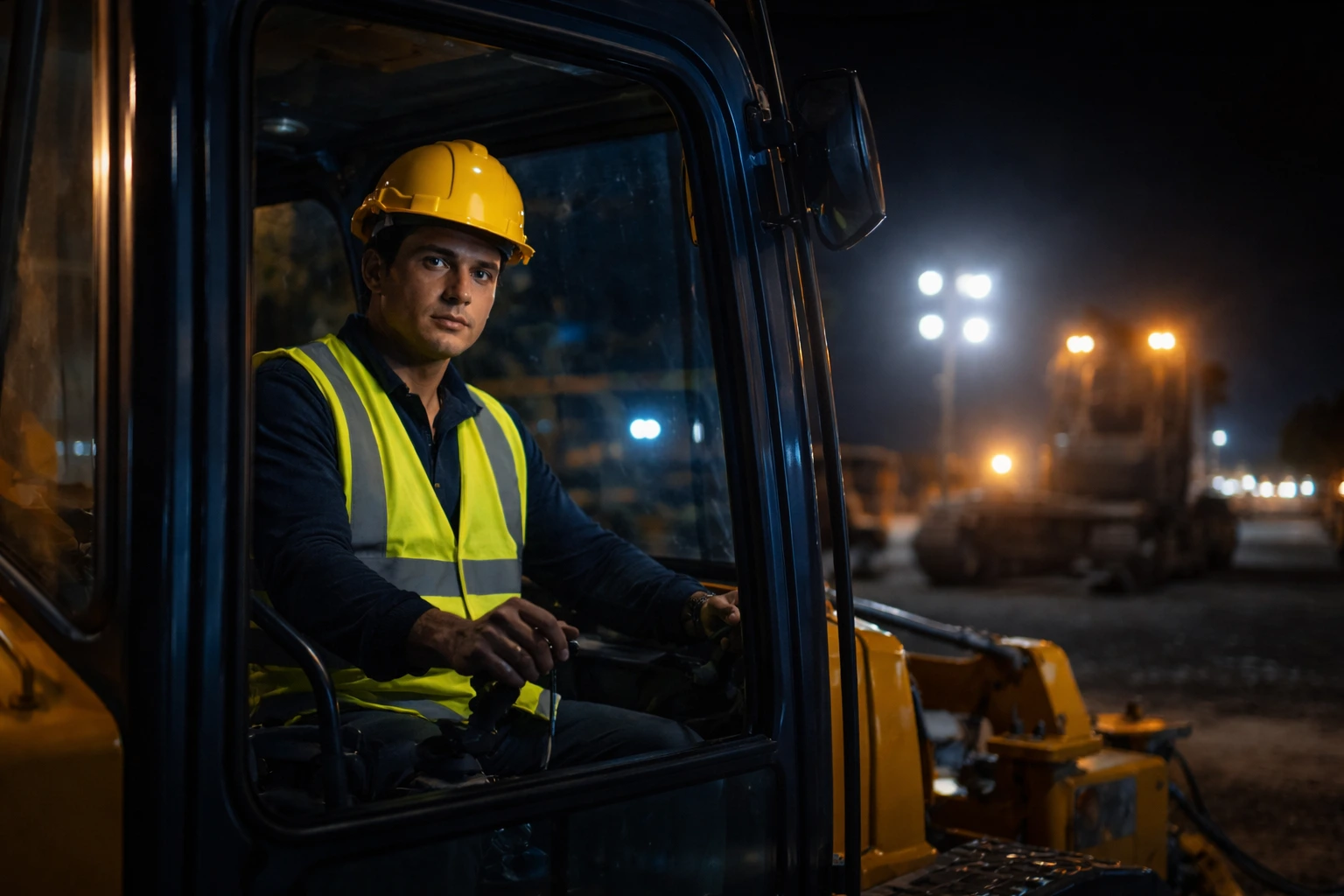
Construction Site at Night Safety Guide
Working on a construction site at night completely changes how you handle risk. Once the sun goes down, visibility drops, depth perception shifts, and equipment blind spots become more challenging under artificial lights. Even though the safety standards stay the same, getting things right becomes much more urgent when you're working in the dark.
Running a night shift still requires following a solid PPE plan and hazard controls, just like you'd find in a standard construction safety gear guide. What really changes after dark isn't the rules themselves, but how strictly you have to follow them. Staying safe at night actually comes down to things like coordinated lighting, high-visibility gear, and a proactive approach to nighttime construction challenges.
Common Risks on a Construction Site at Night
Working in low light affects more than just basic visibility because it changes how workers perceive movement, distance, and elevation. Shadows often distort edges, and glare makes it harder to see contrast, which means equipment operators have to rely heavily on consistent lighting and clear identification of everyone on the ground.
Fatigue also increases the chance of slower reaction times or skipped safety steps. Additionally, security risks tend to rise when there are fewer people on-site and overall activity in the area decreases.
Environmental Exposure
It is much more difficult to evaluate temporary access routes, uneven terrain, and material staging areas under artificial lighting. When illumination is inconsistent, it creates shadow pockets that lead to increased trip hazards and misjudged clearance for heavy equipment.
Human Performance Factors
Extended shifts reduce hazard recognition and decision speed. Research available through ScienceDirect confirms measurable declines in safety performance during nighttime construction, as fatigue leaves very little room for error when a hazard emerges.
Nighttime Construction Lighting Standards and Glare Control
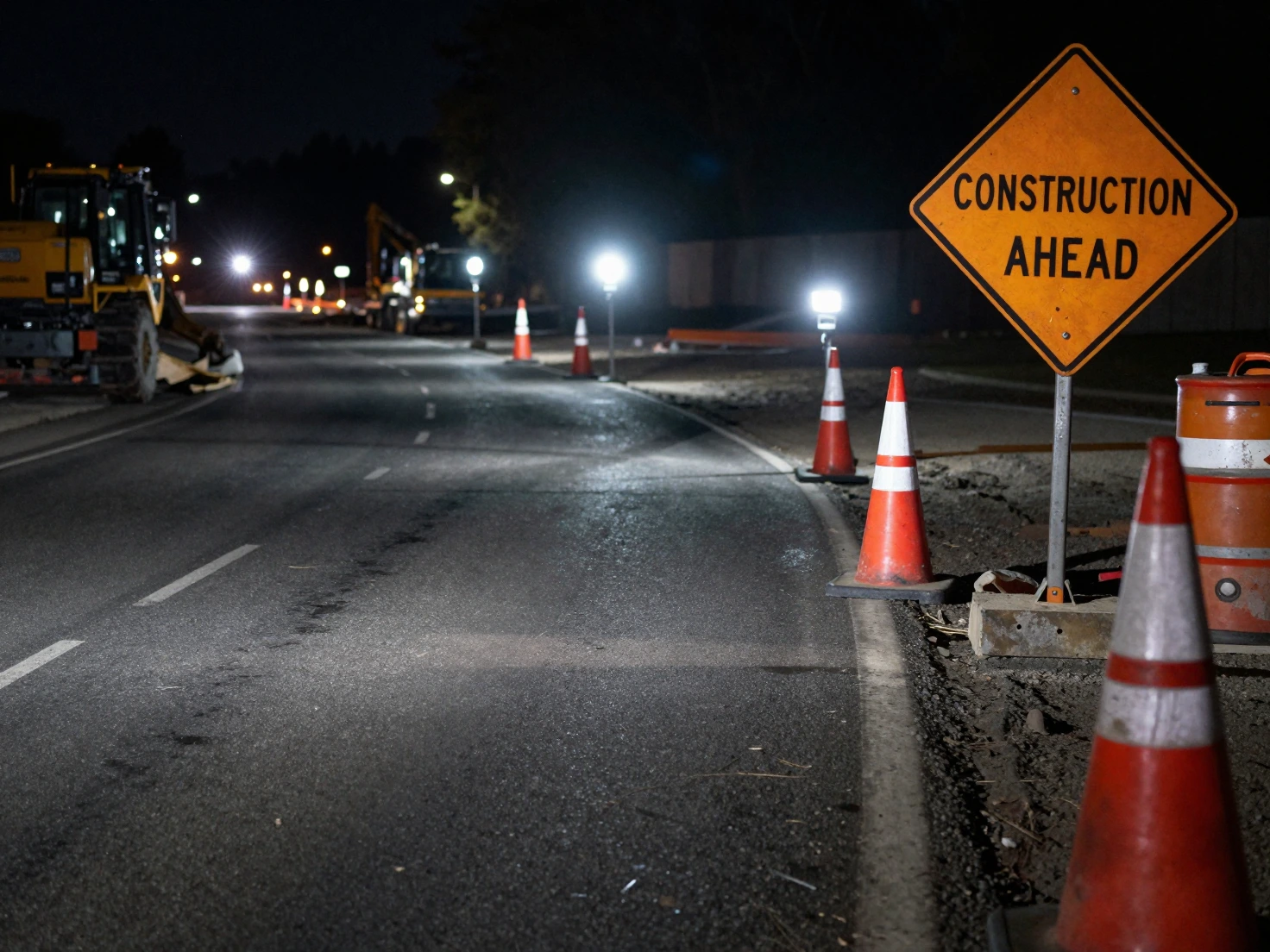
Effective nighttime construction must support task visibility without creating glare that interferes with operators or nearby traffic. Simply increasing brightness does not solve the problem, as the actual distribution, aiming, and positioning of fixtures determine whether the lighting reduces or increases exposure.
Federal recommendations indicate that work zones should meet or exceed the illumination levels of surrounding roadways, with glare actively mitigated through proper fixture alignment. Technical parameters are detailed in the FHWA Lighting Handbook.
Lighting plans should prioritize uniform coverage across work paths and controlled glare at eye level, while ensuring a clear definition of elevation transitions and site boundaries.
Integrated Head and Task Lighting
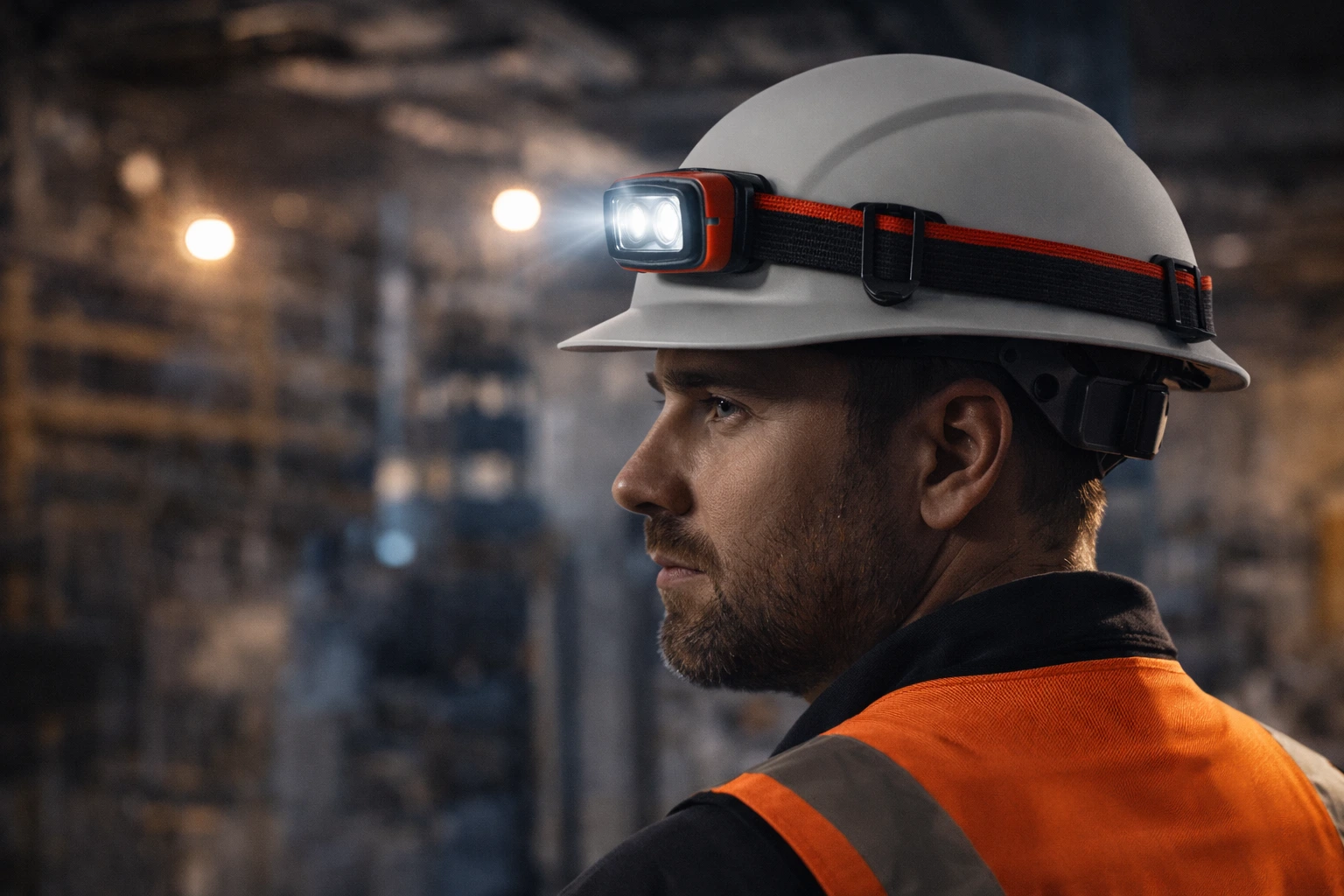
Beyond tower lighting, personal illumination plays a key role in precision work. Modern head protection systems designed for construction environments often allow for compatibility with mounted lighting accessories, as properly integrated lighting improves task visibility without compromising balance or PPE stability.
Head-mounted lighting should not replace site illumination, but it can effectively reduce localized shadow exposure during detailed operations.
High Visibility Gear and PPE Requirements
Artificial illumination does not eliminate the need for clear worker identification. High-visibility gear is essential because it increases the detection distance for both equipment operators and passing vehicles.
Reflective outerwear, helmets, gloves, and eye protection must work together without restricting mobility or peripheral vision. Equipment selection should prioritize durability and compatibility across all PPE components, and these standards can be effectively maintained through centralized procurement within a structured safety supplies collection.
Head Protection, Stability and Low-Light Conditions
Head protection plays a critical role in nighttime environments. Stability, side-impact resistance, and retention systems all influence how well helmets perform during extended shifts. Modern helmet systems engineered for industrial construction improve balance and stay secure during movement, which becomes even more important when visibility is reduced.
Compatibility with additional protective elements like face shields and mounted accessories supports safer performance when environmental conditions are less predictable.
Work Zone Traffic Control at Night
When projects involve road exposure, work zone traffic control becomes much more complex after dark. Driver perception changes under artificial lighting, and glare can significantly reduce detection distance.
Traffic coordination should include
- Warning signage with reflective surfaces
- Clearly illuminated flagger stations
- Reflective channelizing devices
- Defined buffer zones separating traffic from active work
Lighting placement must reinforce traffic flow instead of competing with it. Poor alignment between traffic devices and illumination naturally increases confusion and the overall risk of a collision.
Managing Fatigue in Overnight Construction
Extended shifts are common in overnight construction, particularly in urban or high-traffic environments. Because of this, fatigue management is an operational requirement rather than an optional consideration.
Shift rotation, scheduled rest intervals, and hydration standards help reduce cumulative exposure. Mid-project evaluation becomes essential when operating on a construction site at night, as this is where environmental and human risk factors often converge.
Fatigue does not eliminate regulatory obligations, but it does increase the importance of supervision and structured sequencing.
What Time Does Construction Have to Stop During Night Projects
When construction has to stop is typically defined by municipal noise ordinances and local permitting requirements, particularly for projects operating beyond standard daytime hours. Even so, safety standards remain constant regardless of the schedule, requiring employers to assess and control site-specific hazards through formal risk analysis.
Night projects often require documented coordination with local authorities and structured planning to address community impact. Height-related hazards persist after dark, and fall protection measures such as guardrail systems, edge protection, and personal fall arrest equipment remain mandatory wherever elevation exposure cannot be eliminated.
Construction Site Night Security and Planning
Beyond operational hazards, construction site night security must address unauthorized access, material exposure, and equipment staging control. Security planning should include controlled entry points and coordinated perimeter lighting, along with equipment inventory tracking and defined communication procedures.
These integrated site protection strategies align with the structured risk management practices outlined in broader construction site protection planning. Since security breakdowns frequently translate into safety incidents, both must be managed together.
What It Takes to Keep a Construction Site at Night Safe
Maintaining safe operations on a construction site at night requires disciplined execution under demanding conditions. Success depends on ensuring lighting is coordinated, PPE remains visible, and traffic exposure is strictly controlled, all while managing crew fatigue and site access.
Modern head protection systems engineered for industrial environments contribute directly to stability and accessory integration in low-light conditions. Selecting equipment designed for these settings supports both worker protection and operational continuity.
Industrial safety planning benefits from suppliers who understand these daily operating realities. This expertise is reflected in the specialized solutions and Type 2 technology available through TPR Industrial.
Nighttime Construction Safety FAQs
Is working on a construction site at night more hazardous?
It can be if lighting, visibility, and supervision are not properly managed. Reduced contrast and worker fatigue increase exposure. With structured planning and controlled execution, risk can be managed effectively.
What is the most important safety factor at night?
Lighting distribution is critical. Uniform illumination and glare control determine whether hazards are reduced or amplified.
How does fatigue impact overnight construction work?
Fatigue slows reaction time and reduces hazard recognition. Rotating tasks and scheduling rest periods help maintain performance levels.
Do construction hours change safety requirements?
Operating hours may be regulated locally, but safety standards remain constant. PPE, fall protection, and traffic control obligations still apply after dark.
Construction Site at Night Safety Guide
Working on a construction site at night completely changes how you handle risk. Once the sun goes down, visibility drops, depth perception shifts, and equipment blind spots become more challenging under artificial lights. Even though the safety standards stay the same, getting things right becomes much more urgent when you're working in the dark.
Running a night shift still requires following a solid PPE plan and hazard controls, just like you'd find in a standard construction safety gear guide. What really changes after dark isn't the rules themselves, but how strictly you have to follow them. Staying safe at night actually comes down to things like coordinated lighting, high-visibility gear, and a proactive approach to nighttime construction challenges.
Common Risks on a Construction Site at Night
Working in low light affects more than just basic visibility because it changes how workers perceive movement, distance, and elevation. Shadows often distort edges, and glare makes it harder to see contrast, which means equipment operators have to rely heavily on consistent lighting and clear identification of everyone on the ground.
Fatigue also increases the chance of slower reaction times or skipped safety steps. Additionally, security risks tend to rise when there are fewer people on-site and overall activity in the area decreases.
Environmental Exposure
It is much more difficult to evaluate temporary access routes, uneven terrain, and material staging areas under artificial lighting. When illumination is inconsistent, it creates shadow pockets that lead to increased trip hazards and misjudged clearance for heavy equipment.
Human Performance Factors
Extended shifts reduce hazard recognition and decision speed. Research available through ScienceDirect confirms measurable declines in safety performance during nighttime construction, as fatigue leaves very little room for error when a hazard emerges.
Nighttime Construction Lighting Standards and Glare Control
Effective nighttime construction must support task visibility without creating glare that interferes with operators or nearby traffic. Simply increasing brightness does not solve the problem, as the actual distribution, aiming, and positioning of fixtures determine whether the lighting reduces or increases exposure.
Federal recommendations indicate that work zones should meet or exceed the illumination levels of surrounding roadways, with glare actively mitigated through proper fixture alignment. Technical parameters are detailed in the FHWA Lighting Handbook.
Lighting plans should prioritize uniform coverage across work paths and controlled glare at eye level, while ensuring a clear definition of elevation transitions and site boundaries.
Integrated Head and Task Lighting
Beyond tower lighting, personal illumination plays a key role in precision work. Modern head protection systems designed for construction environments often allow for compatibility with mounted lighting accessories, as properly integrated lighting improves task visibility without compromising balance or PPE stability.
Head-mounted lighting should not replace site illumination, but it can effectively reduce localized shadow exposure during detailed operations.
High Visibility Gear and PPE Requirements
Artificial illumination does not eliminate the need for clear worker identification. High-visibility gear is essential because it increases the detection distance for both equipment operators and passing vehicles.
Reflective outerwear, helmets, gloves, and eye protection must work together without restricting mobility or peripheral vision. Equipment selection should prioritize durability and compatibility across all PPE components, and these standards can be effectively maintained through centralized procurement within a structured safety supplies collection.
Head Protection, Stability and Low-Light Conditions
Head protection plays a critical role in nighttime environments. Stability, side-impact resistance, and retention systems all influence how well helmets perform during extended shifts. Modern helmet systems engineered for industrial construction improve balance and stay secure during movement, which becomes even more important when visibility is reduced.
Compatibility with additional protective elements like face shields and mounted accessories supports safer performance when environmental conditions are less predictable.
Work Zone Traffic Control at Night
When projects involve road exposure, work zone traffic control becomes much more complex after dark. Driver perception changes under artificial lighting, and glare can significantly reduce detection distance.
Traffic coordination should include
- Warning signage with reflective surfaces
- Clearly illuminated flagger stations
- Reflective channelizing devices
- Defined buffer zones separating traffic from active work
Lighting placement must reinforce traffic flow instead of competing with it. Poor alignment between traffic devices and illumination naturally increases confusion and the overall risk of a collision.
Managing Fatigue in Overnight Construction
Extended shifts are common in overnight construction, particularly in urban or high-traffic environments. Because of this, fatigue management is an operational requirement rather than an optional consideration.
Shift rotation, scheduled rest intervals, and hydration standards help reduce cumulative exposure. Mid-project evaluation becomes essential when operating on a construction site at night, as this is where environmental and human risk factors often converge.
Fatigue does not eliminate regulatory obligations, but it does increase the importance of supervision and structured sequencing.
What Time Does Construction Have to Stop During Night Projects
When construction has to stop is typically defined by municipal noise ordinances and local permitting requirements, particularly for projects operating beyond standard daytime hours. Even so, safety standards remain constant regardless of the schedule, requiring employers to assess and control site-specific hazards through formal risk analysis.
Night projects often require documented coordination with local authorities and structured planning to address community impact. Height-related hazards persist after dark, and fall protection measures such as guardrail systems, edge protection, and personal fall arrest equipment remain mandatory wherever elevation exposure cannot be eliminated.
Construction Site Night Security and Planning
Beyond operational hazards, construction site night security must address unauthorized access, material exposure, and equipment staging control. Security planning should include controlled entry points and coordinated perimeter lighting, along with equipment inventory tracking and defined communication procedures.
These integrated site protection strategies align with the structured risk management practices outlined in broader construction site protection planning. Since security breakdowns frequently translate into safety incidents, both must be managed together.
What It Takes to Keep a Construction Site at Night Safe
Maintaining safe operations on a construction site at night requires disciplined execution under demanding conditions. Success depends on ensuring lighting is coordinated, PPE remains visible, and traffic exposure is strictly controlled, all while managing crew fatigue and site access.
Modern head protection systems engineered for industrial environments contribute directly to stability and accessory integration in low-light conditions. Selecting equipment designed for these settings supports both worker protection and operational continuity.
Industrial safety planning benefits from suppliers who understand these daily operating realities. This expertise is reflected in the specialized solutions and Type 2 technology available through TPR Industrial.
Nighttime Construction Safety FAQs
Is working on a construction site at night more hazardous?
It can be if lighting, visibility, and supervision are not properly managed. Reduced contrast and worker fatigue increase exposure. With structured planning and controlled execution, risk can be managed effectively.
What is the most important safety factor at night?
Lighting distribution is critical. Uniform illumination and glare control determine whether hazards are reduced or amplified.
How does fatigue impact overnight construction work?
Fatigue slows reaction time and reduces hazard recognition. Rotating tasks and scheduling rest periods help maintain performance levels.
Do construction hours change safety requirements?
Operating hours may be regulated locally, but safety standards remain constant. PPE, fall protection, and traffic control obligations still apply after dark.
