 English
 Español
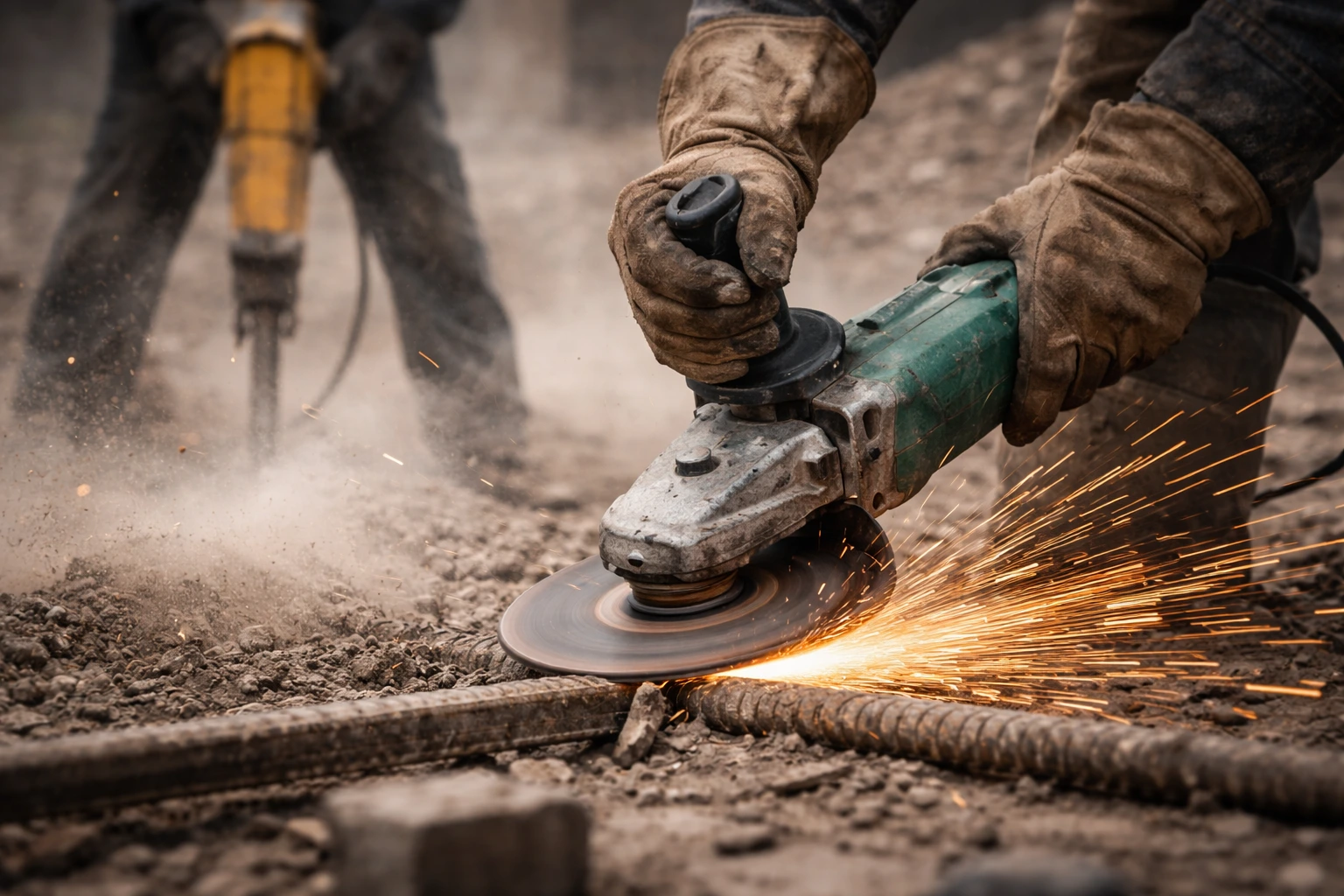
Industrial job sites are loud, but the real danger is how quickly that noise becomes a permanent liability. A single shift operating heavy equipment, power tools, or compressors can silently push your workers past the point of no return for their hearing. Navigating the OSHA requirement for hearing protection is about more than just compliance; it is about making high-stakes decisions that protect your crew's future and your company's operations.
At TPR Industrial, we work with safety managers and crew leaders who need answers that hold up in the field, not just on paper. Identifying precisely where and when these safety mandates apply is the critical first step in building a program that mitigates risk before the damage becomes irreversible
When Is Hearing Protection Required Under OSHA
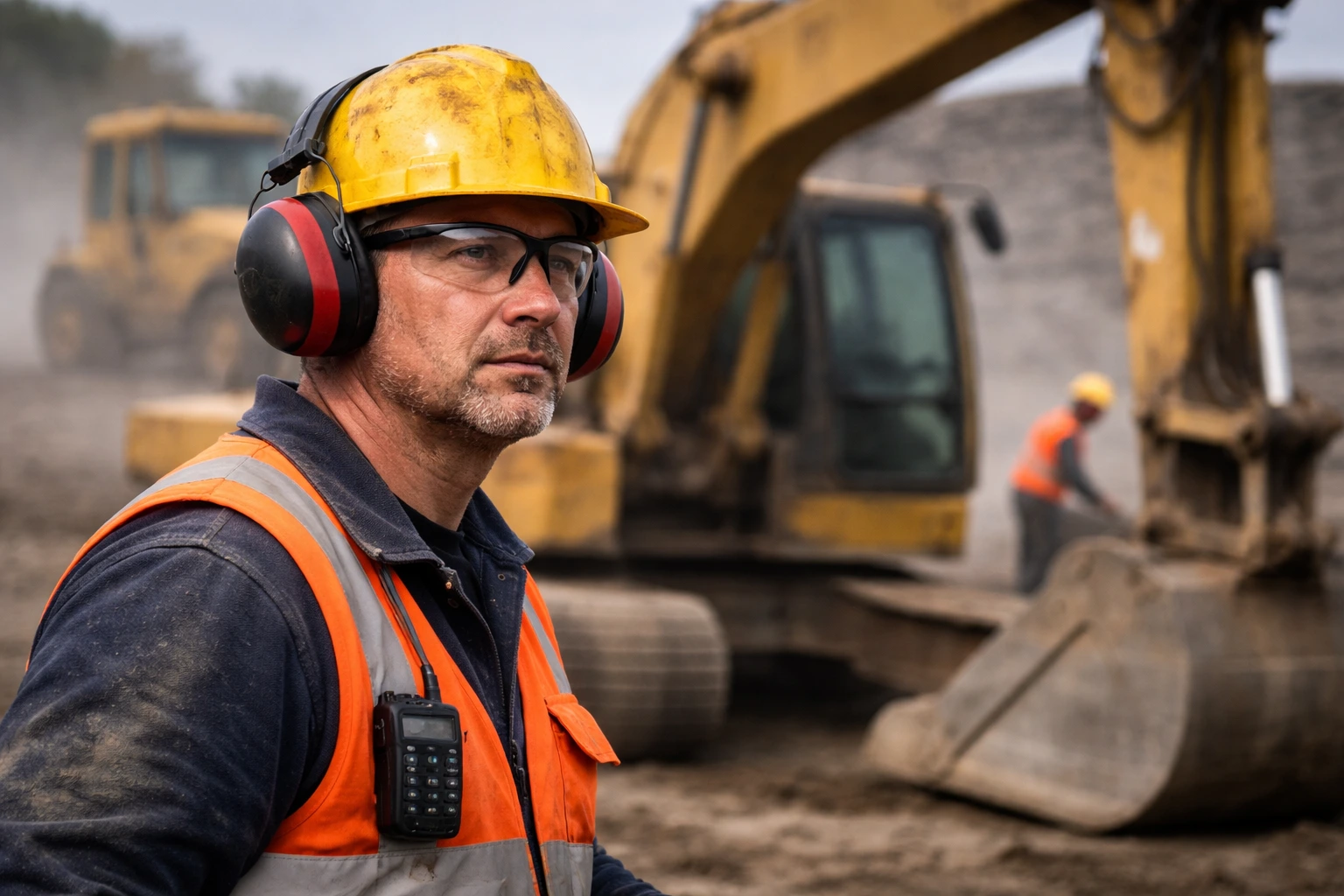
Compliance is driven by cumulative exposure rather than isolated peaks in volume. OSHA calculates the necessity for protection based on a total noise dose sustained throughout a full work shift. According to the OSHA general industry standard (29 CFR 1910.95), the action level is set at 85 decibels on an 8-hour time-weighted average (TWA). Once a crew reaches this threshold, whether from a single intense source or the steady drone of a job site, providing protection is no longer optional.
OSHA Noise Level Standards: The 85 dBA Rule in Practice
Decibel hearing protection requirements are tied to the relationship between volume and duration. While OSHA noise level standards use 85 dBA as the trigger for a conservation program, the permissible exposure limit (PEL) for a full workday is 90 dBA.
As the volume climbs, the window for safe exposure shrinks rapidly. At 100 dBA, the allowable time drops to just 2 hours. At 110 dBA, it is only 30 minutes. Jackhammers, grinders, and diesel engines routinely cross these limits, often causing damage before a worker even notices the strain. According to the National Institute on Deafness and Other Communication Disorders, repeated exposure at or above 85 dBA can cause permanent hearing loss with no clinical treatment for reversal.
Employer Obligations and Safety Management
Once noise levels cross the action threshold, the burden of maintaining a safe environment falls squarely on the company. Meeting the OSHA requirement for hearing protection under 29 CFR 1910.95(i) involves a series of active safety measures rather than passive checkboxes. To stay within OSHA hearing protection regulations, leadership must execute several key safety mandates.
Effective management begins with noise monitoring to identify at-risk zones and continues with the provision of various approved hearing protection devices (HPDs) at no cost to the worker. Beyond equipment distribution, employers are responsible for verifying that the selected protection offers sufficient attenuation for the specific environment and ensuring the crew receives proper training on correct usage.
This integrated approach ensures that monitoring identifies the hazard, device selection provides the physical barrier, and training guarantees that the barrier is used effectively. This structured focus on liability and safety is standard across all categories, similar to how construction site first aid kit requirements follow the same logic of identifying needs, providing resources, and verifying readiness for the field.
Selecting the Right Gear for the Job Site
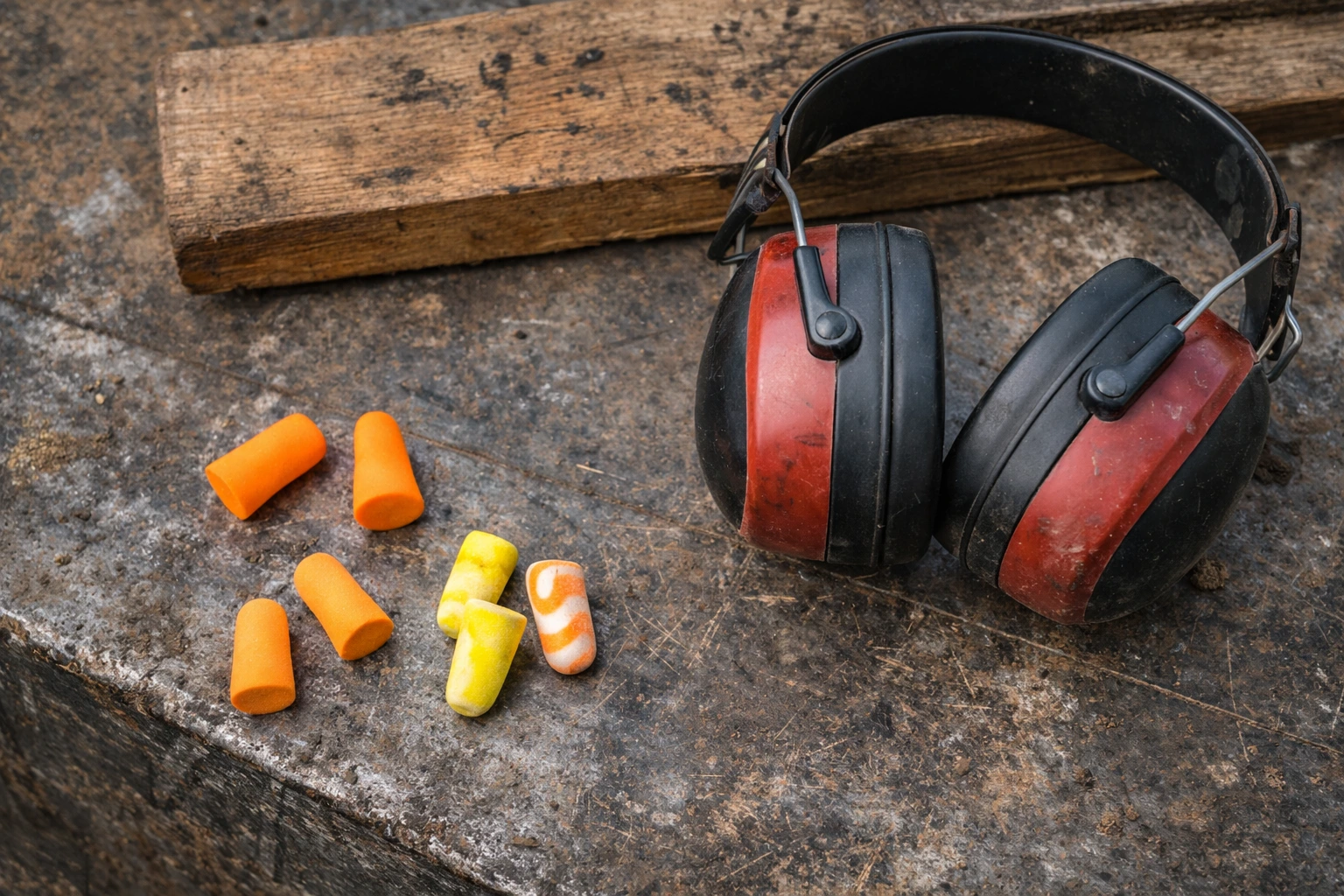
Choosing the correct equipment depends on the specific noise environment, the task at hand, and how consistently the crew will use it. In most industrial settings, PPE for hearing protection is categorized into two primary types: earplugs and earmuffs.
- Foam earplugs: These are disposable and offer high NRR (up to 33). They are best for sustained high-noise environments.
- Reusable earplugs: These offer a lower long-term cost. They require fit verification and regular cleaning.
- Banded earplugs: These are practical for intermittent noise. They are easy to remove and reinsert between tasks.
- Over-ear earmuffs: These are useful when earplugs are impractical or individual fit is difficult to confirm.
- Dual protection (earplugs + earmuffs): This combination is required when noise exposure exceeds 100 dBA.
OSHA-approved ear protection does not specify a brand or style. It requires that the device's Noise Reduction Rating (NRR) be adequate for the measured noise level on that specific site. For a complete picture of the PPE your crew should have in place, construction site safety gear requirements are a solid reference for what a full job site program looks like.
The Role of NRR in Professional Gear Selection
To select the right gear, you must understand that the Noise Reduction Rating (NRR) printed on HPD packaging is a laboratory estimate, not a field guarantee. OSHA recommends a derating process to calculate practical protection, which involves dividing the NRR by two and subtracting that number from the workplace noise level.
For example, an earplug with an NRR of 30 provides roughly 15 dB of real-world attenuation. In a 100 dBA environment, this process brings effective exposure down to 85 dBA, which is exactly at the action level. Relying on the face value of the NRR without this adjustment can lead to underprotecting your crew and failing an audit.
The ANSI hearing protection standard (ANSI S3.19) provides the framework for these ratings, while ANSI S12.6 focuses on individual fit testing to confirm that the HPD performs as expected for each worker. This critical process of verifying laboratory ratings against field performance is a standard practice we apply across all categories, including our ANSI hard hat standard guide where field readiness and certification intersect.
The OSHA Hearing Conservation Program
When noise reaches or exceeds 85 dBA TWA, OSHA mandates the implementation of a full hearing conservation program. This is not a suggestion; it is a regulatory requirement that involves five core pillars: noise monitoring, audiometric testing, provision of HPDs, employee training, and comprehensive recordkeeping.
Each element exists to close a potential gap in your liability. Monitoring identifies who is at risk, while annual audiograms act as an early warning system to catch hearing loss before it becomes a workers' compensation claim. However, before relying on PPE, leadership must follow the official OSHA noise and hearing conservation hierarchy of controls to manage hazardous noise effectively:
- Engineering Controls: The first line of defence. This involves modifying or replacing equipment to eliminate or reduce noise at the source (e.g., using silencers, barriers, or acoustic enclosures).
- Administrative Controls: Managing the exposure duration by rotating crew members or scheduling heavy machine operation during off-peak hours to reduce the cumulative dose.
- Hearing Protection Devices (HPDs): The final layer of protection. When engineering and administrative controls cannot reduce noise below 90 dBA (or 85 dBA for the conservation program), providing high-quality HPDs is mandatory.
The hierarchy exists because HPDs address the exposure, but engineering controls address the hazard. During an inspection, relying solely on earplugs without first assessing noise reduction at the source often appears as an incomplete safety strategy.
Protecting the Workforce by Selecting the Right Gear
Noise-induced hearing loss is permanent; there is no medical treatment to reverse the damage and no settlement that replaces it. Beyond the physical toll on your team, failing to meet safety standards exposes the company to significant financial risk. While avoiding regulatory citations is a priority, the most substantial cost is the long-term impact on a skilled worker who can no longer communicate effectively on a hazardous job site.
The logic of compliance mirrors every other area of site safety where you must verify the standard, equip the team, and document the results. Building a robust program is an investment made before an incident occurs, ensuring that safety is a constant pillar of your operations rather than a reaction to a failure.
Securing the right hearing protection means choosing devices that align with the specific NRR requirements of your environment. Whether your project demands high-attenuation foam plugs or low-profile earmuffs for intermittent use, selecting gear based on real-world conditions ensures your program stays ahead of the regulations and your team stays protected.
FAQs About OSHA Hearing Protection Requirements

When must employers provide hearing protection?
Employers must provide HPDs at no cost to all workers exposed to 85 dBA or greater on an 8-hour TWA. Workers must also be given a choice among suitable approved options.
What OSHA noise level requires hearing protection?
The action level for hearing conservation is 85 dBA on an 8-hour TWA. This is when the OSHA requirement for hearing protection takes full effect, including the five-element conservation program. The permissible exposure limit (PEL) for a full shift is 90 dBA.
Are earplugs OSHA-approved hearing protection?
Yes. Earplugs are accepted as long as they provide adequate NRR-based attenuation for the measured noise environment. Employers must verify a proper fit and train workers on the correct insertion technique.
What does the ANSI hearing protection standard cover?
ANSI S3.19 defines the test methodology behind NRR ratings. ANSI S12.6 governs fit testing protocols, including quantitative fit testing. NIOSH now recommends these protocols to confirm each worker is protected based on their individual fit.
Industrial job sites are loud, but the real danger is how quickly that noise becomes a permanent liability. A single shift operating heavy equipment, power tools, or compressors can silently push your workers past the point of no return for their hearing. Navigating the OSHA requirement for hearing protection is about more than just compliance; it is about making high-stakes decisions that protect your crew's future and your company's operations.
At TPR Industrial, we work with safety managers and crew leaders who need answers that hold up in the field, not just on paper. Identifying precisely where and when these safety mandates apply is the critical first step in building a program that mitigates risk before the damage becomes irreversible
When Is Hearing Protection Required Under OSHA
Compliance is driven by cumulative exposure rather than isolated peaks in volume. OSHA calculates the necessity for protection based on a total noise dose sustained throughout a full work shift. According to the OSHA general industry standard (29 CFR 1910.95), the action level is set at 85 decibels on an 8-hour time-weighted average (TWA). Once a crew reaches this threshold, whether from a single intense source or the steady drone of a job site, providing protection is no longer optional.
OSHA Noise Level Standards: The 85 dBA Rule in Practice
Decibel hearing protection requirements are tied to the relationship between volume and duration. While OSHA noise level standards use 85 dBA as the trigger for a conservation program, the permissible exposure limit (PEL) for a full workday is 90 dBA.
As the volume climbs, the window for safe exposure shrinks rapidly. At 100 dBA, the allowable time drops to just 2 hours. At 110 dBA, it is only 30 minutes. Jackhammers, grinders, and diesel engines routinely cross these limits, often causing damage before a worker even notices the strain. According to the National Institute on Deafness and Other Communication Disorders, repeated exposure at or above 85 dBA can cause permanent hearing loss with no clinical treatment for reversal.
Employer Obligations and Safety Management
Once noise levels cross the action threshold, the burden of maintaining a safe environment falls squarely on the company. Meeting the OSHA requirement for hearing protection under 29 CFR 1910.95(i) involves a series of active safety measures rather than passive checkboxes. To stay within OSHA hearing protection regulations, leadership must execute several key safety mandates.
Effective management begins with noise monitoring to identify at-risk zones and continues with the provision of various approved hearing protection devices (HPDs) at no cost to the worker. Beyond equipment distribution, employers are responsible for verifying that the selected protection offers sufficient attenuation for the specific environment and ensuring the crew receives proper training on correct usage.
This integrated approach ensures that monitoring identifies the hazard, device selection provides the physical barrier, and training guarantees that the barrier is used effectively. This structured focus on liability and safety is standard across all categories, similar to how construction site first aid kit requirements follow the same logic of identifying needs, providing resources, and verifying readiness for the field.
Selecting the Right Gear for the Job Site
Choosing the correct equipment depends on the specific noise environment, the task at hand, and how consistently the crew will use it. In most industrial settings, PPE for hearing protection is categorized into two primary types: earplugs and earmuffs.
- Foam earplugs: These are disposable and offer high NRR (up to 33). They are best for sustained high-noise environments.
- Reusable earplugs: These offer a lower long-term cost. They require fit verification and regular cleaning.
- Banded earplugs: These are practical for intermittent noise. They are easy to remove and reinsert between tasks.
- Over-ear earmuffs: These are useful when earplugs are impractical or individual fit is difficult to confirm.
- Dual protection (earplugs + earmuffs): This combination is required when noise exposure exceeds 100 dBA.
OSHA-approved ear protection does not specify a brand or style. It requires that the device's Noise Reduction Rating (NRR) be adequate for the measured noise level on that specific site. For a complete picture of the PPE your crew should have in place, construction site safety gear requirements are a solid reference for what a full job site program looks like.
The Role of NRR in Professional Gear Selection
To select the right gear, you must understand that the Noise Reduction Rating (NRR) printed on HPD packaging is a laboratory estimate, not a field guarantee. OSHA recommends a derating process to calculate practical protection, which involves dividing the NRR by two and subtracting that number from the workplace noise level.
For example, an earplug with an NRR of 30 provides roughly 15 dB of real-world attenuation. In a 100 dBA environment, this process brings effective exposure down to 85 dBA, which is exactly at the action level. Relying on the face value of the NRR without this adjustment can lead to underprotecting your crew and failing an audit.
The ANSI hearing protection standard (ANSI S3.19) provides the framework for these ratings, while ANSI S12.6 focuses on individual fit testing to confirm that the HPD performs as expected for each worker. This critical process of verifying laboratory ratings against field performance is a standard practice we apply across all categories, including our ANSI hard hat standard guide where field readiness and certification intersect.
The OSHA Hearing Conservation Program
When noise reaches or exceeds 85 dBA TWA, OSHA mandates the implementation of a full hearing conservation program. This is not a suggestion; it is a regulatory requirement that involves five core pillars: noise monitoring, audiometric testing, provision of HPDs, employee training, and comprehensive recordkeeping.
Each element exists to close a potential gap in your liability. Monitoring identifies who is at risk, while annual audiograms act as an early warning system to catch hearing loss before it becomes a workers' compensation claim. However, before relying on PPE, leadership must follow the official OSHA noise and hearing conservation hierarchy of controls to manage hazardous noise effectively:
- Engineering Controls: The first line of defence. This involves modifying or replacing equipment to eliminate or reduce noise at the source (e.g., using silencers, barriers, or acoustic enclosures).
- Administrative Controls: Managing the exposure duration by rotating crew members or scheduling heavy machine operation during off-peak hours to reduce the cumulative dose.
- Hearing Protection Devices (HPDs): The final layer of protection. When engineering and administrative controls cannot reduce noise below 90 dBA (or 85 dBA for the conservation program), providing high-quality HPDs is mandatory.
The hierarchy exists because HPDs address the exposure, but engineering controls address the hazard. During an inspection, relying solely on earplugs without first assessing noise reduction at the source often appears as an incomplete safety strategy.
Protecting the Workforce by Selecting the Right Gear
Noise-induced hearing loss is permanent; there is no medical treatment to reverse the damage and no settlement that replaces it. Beyond the physical toll on your team, failing to meet safety standards exposes the company to significant financial risk. While avoiding regulatory citations is a priority, the most substantial cost is the long-term impact on a skilled worker who can no longer communicate effectively on a hazardous job site.
The logic of compliance mirrors every other area of site safety where you must verify the standard, equip the team, and document the results. Building a robust program is an investment made before an incident occurs, ensuring that safety is a constant pillar of your operations rather than a reaction to a failure.
Securing the right hearing protection means choosing devices that align with the specific NRR requirements of your environment. Whether your project demands high-attenuation foam plugs or low-profile earmuffs for intermittent use, selecting gear based on real-world conditions ensures your program stays ahead of the regulations and your team stays protected.
FAQs About OSHA Hearing Protection Requirements
When must employers provide hearing protection?
Employers must provide HPDs at no cost to all workers exposed to 85 dBA or greater on an 8-hour TWA. Workers must also be given a choice among suitable approved options.
What OSHA noise level requires hearing protection?
The action level for hearing conservation is 85 dBA on an 8-hour TWA. This is when the OSHA requirement for hearing protection takes full effect, including the five-element conservation program. The permissible exposure limit (PEL) for a full shift is 90 dBA.
Are earplugs OSHA-approved hearing protection?
Yes. Earplugs are accepted as long as they provide adequate NRR-based attenuation for the measured noise environment. Employers must verify a proper fit and train workers on the correct insertion technique.
What does the ANSI hearing protection standard cover?
ANSI S3.19 defines the test methodology behind NRR ratings. ANSI S12.6 governs fit testing protocols, including quantitative fit testing. NIOSH now recommends these protocols to confirm each worker is protected based on their individual fit.
