 English
 Español
10 Fall Protection Safety Tips for Jobsites
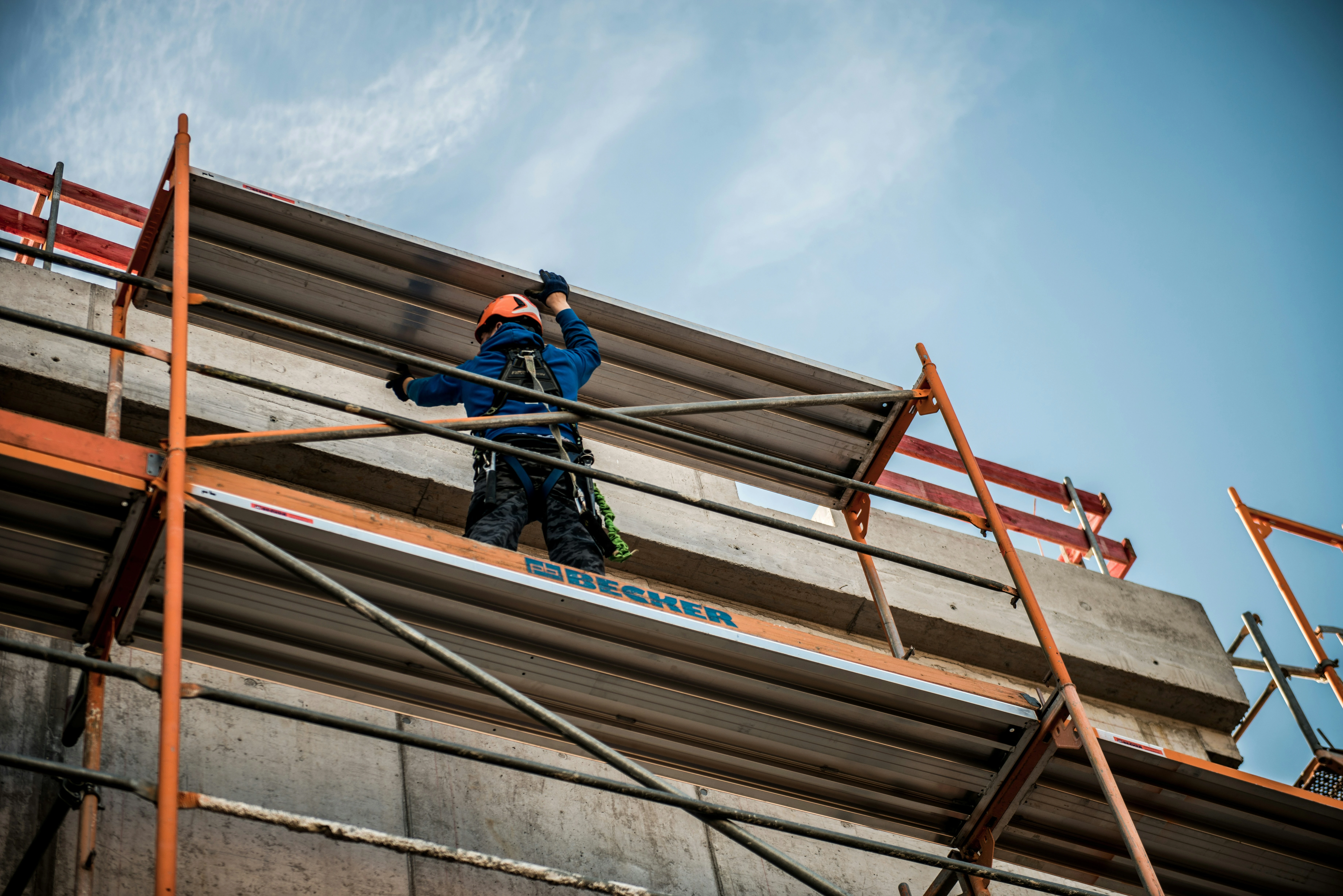
Crews working at height are consistently exposed to fall risks on every shift. On active construction projects, fall protection safety tips directly influence injury prevention. Therefore, conducting continuous checks on every exposed section, dividing responsibilities clearly, and maintaining minimum safety standards will help prevent these risks.
Falls remain one of the leading causes of serious injuries in construction and, at times, a series of simple actions, such as edge protection, anchor planning, and supervision, are applied inconsistently.
Strong programs treat elevation control as part of overall operational risk management. Many organizations centralize procedures, inspection requirements, and equipment standards through structured safety platforms that standardize selection. For that reason, working with an industrial and safety solutions provider such as TPR Industrial becomes relevant.
General Overview of Fall Risk
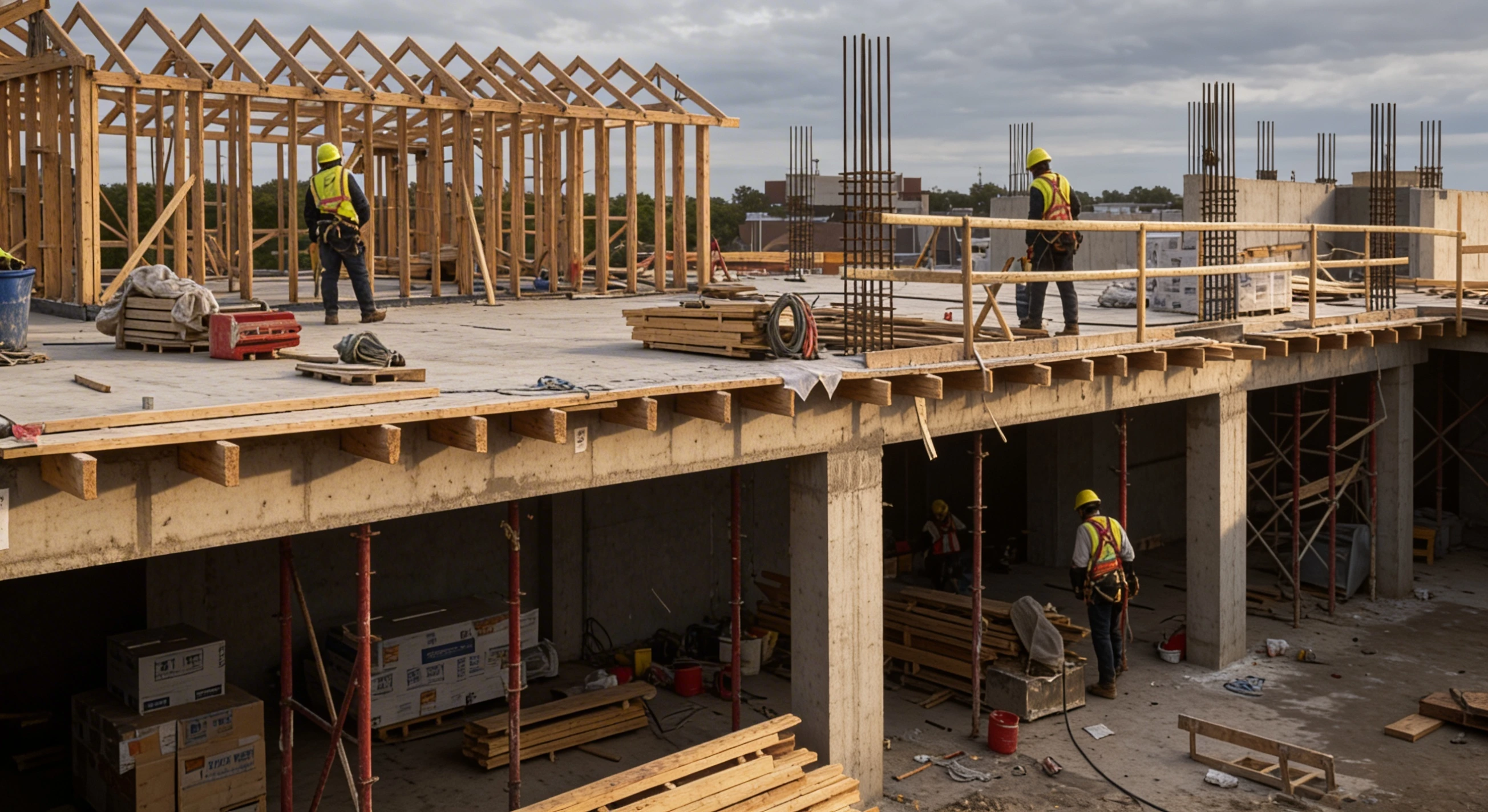
Effective fall protection is not just about harnesses. It requires hazard identification, correct system selection, field compliance, regulatory alignment, and disciplined supervision by foremen and safety managers.
For crews sourcing equipment, TPR Industrial offers fall protection equipment, including full-body safety harnesses, fall protection anchors, lanyards, and lifelines.
Incidents at height rarely result from a single failure. They develop when site conditions, sequencing pressure, supervision gaps, and equipment decisions overlap.
Exposure typically increases during transition phases, from structural framing to decking, from roofing to mechanical installations, or from scaffold erection to façade work. Each day introduces new exposed edges and modified access routes as the project progresses.
Common Causes Of Falls In The Workplace
Across active jobsites, causes of falls in the workplace usually involve a combination of unsafe conditions and unsafe acts. Unprotected edges, unstable surfaces, improperly secured scaffold components, and poorly positioned ladders create exposure before tasks even begin.
Rushing transitions, leaning beyond guardrails, skipping tie-off points, carrying materials while climbing, or bypassing inspections amplify that risk. Complacency during repetitive tasks also contributes to preventable incidents.
According to federal data referenced by the NIOSH, falls account for approximately 49 percent of construction fatalities nationwide. This figure reinforces how frequently height-related breakdowns occur and why consistent controls are essential.
Types Of Fall Hazards On Construction Sites
As projects advance, fall protection in construction must address changing exposure points such as new roof perimeters, scaffold assembly, aerial lift operations, temporary stair systems, and leading edges. Each construction phase introduces different risk profiles that require reassessment.
Temporary floor openings, stairwell transitions, unprotected shafts, and incomplete guardrail sections remain recurring falling hazards that demand engineered controls rather than improvised solutions.
Additionally, ground conditions influence elevated work. Mud accumulation, material staging near edges, and congested platforms reduce stability and increase slip risk near elevation changes.
Technical System Selection And Control
System choice must match exposure type, clearance availability, anchorage options, and workforce behavior. Controls should be layered rather than singular, prioritizing elimination and passive protection before relying on personal fall arrest equipment.
Passive Protection Before PPE
Guardrails, covers, and engineered barriers reduce reliance on individual behavior. Passive systems provide consistent protection and limit variability between crews, especially when multiple subcontractors operate simultaneously. Therefore, this represents the minimum standard that should be implemented on a jobsite.
Proper installation is critical. Guardrails must meet height and strength criteria, covers must be secured and clearly marked, and temporary barriers must withstand foreseeable loads.
Personal Fall Arrest Systems
When passive controls are not feasible, harnesses, lanyards, lifelines, and certified anchor points become high-risk exposure zones if not properly managed. Anchor capacity must withstand required loads, and fall clearance calculations must account for lanyard length, deceleration distance, worker height, harness stretch, and potential swing fall.
Incorrect anchor selection remains a frequent failure point, as decorative elements, piping, or temporary structures are not acceptable and may compromise proper system performance.
Structured access planning also plays a role. Engineered ladder systems and controlled roof access reduce improvised exposure during transitions, particularly on projects with repeated vertical movement, where a properly designed engineered access systems approach should be implemented.
Equipment Compatibility And Head Protection
Head protection standards continue evolving, especially regarding impact coverage and retention. Side impact resistance and chin strap integration are increasingly relevant on sloped roofs or elevated structures.
Recent compliance adjustments reflect increased attention to multidirectional impact risk and evolving head protection criteria, further detailed within updated OSHA hard hat requirements.
Compatibility between helmets, harnesses, and other PPE should be evaluated to prevent interference during tie-off or ladder transitions.
Operational Application On Active Jobsites
Identifying these risks and selecting systems must translate into repeatable field execution. Supervisors are responsible for verifying these controls daily through observation, correction, and reinforcement.
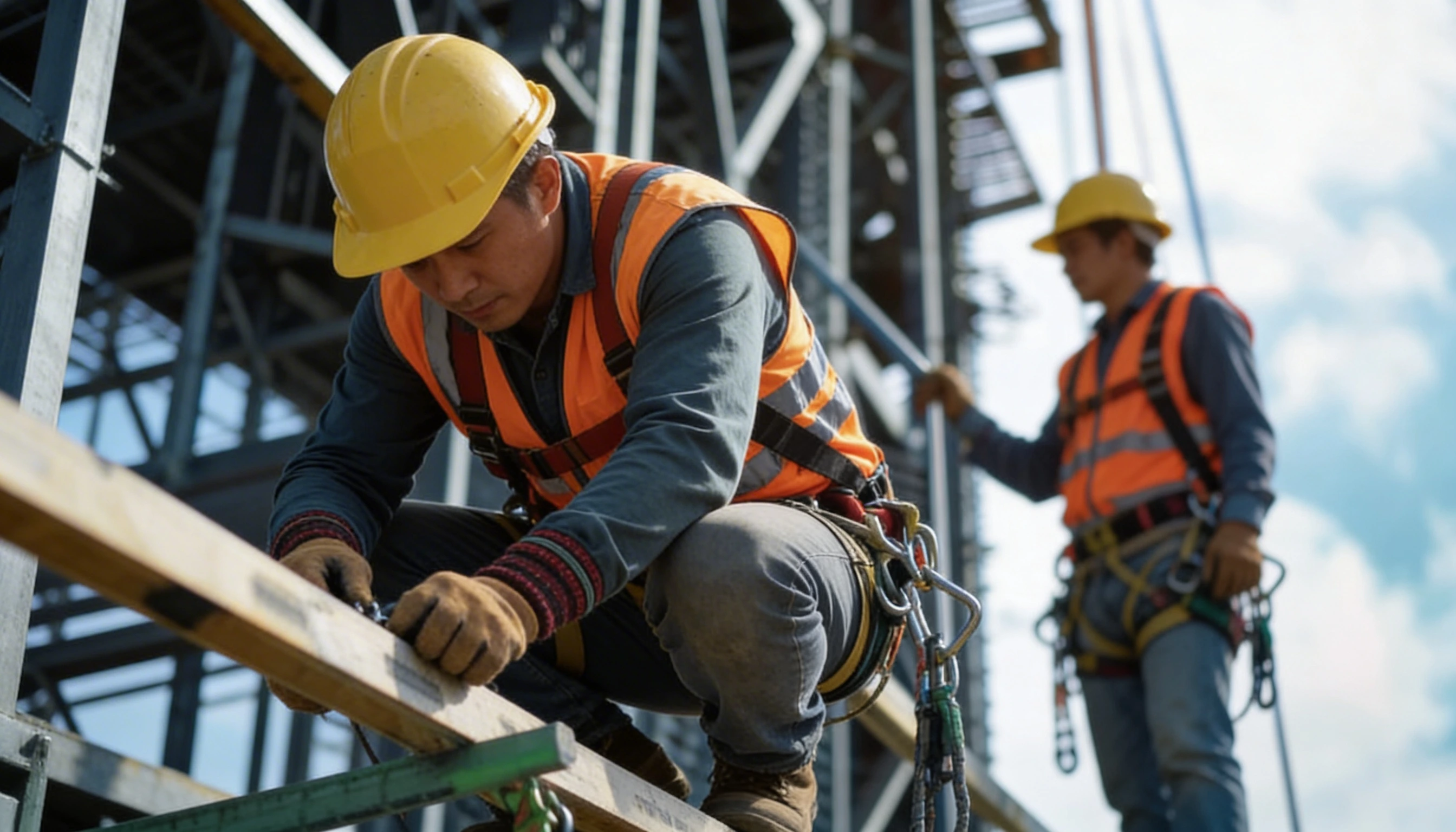
However, maintaining a safe work area is also the responsibility of each worker. With these fall protection safety tips, crews gain general knowledge of applicable actions that can reduce fall exposure as different project phases are implemented.
1. Conduct A Task Specific Hazard Assessment
Evaluate elevation changes, anchor availability, fall clearance, and surface stability before work begins. Exposure shifts quickly as construction progresses.
2. Prioritize Guardrails And Covers
Eliminate open edges wherever possible. Passive protection reduces dependence on individual compliance and limits variability between crews.
3. Verify Anchor Strength And Placement
Anchors must support required loads and minimize swing fall potential. Improvised tie-off points introduce hidden failure risk and compromise arrest performance.
4. Calculate Fall Distance Accurately
Clearance must include full deployment distance and worker position. Low-clearance environments require additional review to prevent bottoming out.
5. Inspect Harnesses And Connectors Daily
Webbing abrasion, damaged stitching, distorted D-rings, and worn connectors reduce system reliability quickly.
6. Apply Consistent Ladder Controls
Field supervisors reinforce disciplined ladder safety tips such as the 4:1 ratio and three-point contact rule to reduce preventable ladder incidents during access and egress.
7. Maintain Safe Walking And Working Surfaces
Debris, cords, uneven transitions, and poor lighting increase slip and trip exposure near elevation changes. Housekeeping remains a foundational control.
8. Secure Openings And Leading Edges Immediately
Temporary covers and engineered barriers prevent uncontrolled access while work phases shift and crews rotate.
9. Establish Rescue Procedures Before Exposure
Every personal fall arrest setup requires a documented rescue plan before work begins. Delayed retrieval increases secondary injury risk.
10. Reinforce Supervisory Oversight
Leadership must continuously enforce established fall protection best practices to prevent shortcuts during schedule pressure and maintain consistent application across shifts.
Compliance And Regulatory Requirements
Regulatory thresholds define when protection becomes mandatory and how systems must perform.
In construction, protection is generally required at six feet above a lower level. Official guidance on fall protection regulations outlines classification, training, and enforcement criteria.
ANSI standards define testing and equipment classification requirements. Employers must verify that all components meet current specifications.
Internal verification strengthens compliance with safety standards. To maintain higher safety levels, a structured audit process can identify overlooked gaps.
Project Planning And Coordination Controls
Before mobilization, fall protection project management must integrate elevation risk into scheduling, trade coordination, and equipment planning.
Proactive planning during the construction process, including installing anchors before structural closure, reduces later improvisation.
Sequencing tasks to avoid overlapping elevated work and aligning procurement with clearly defined categories, including fall protection systems, limits reactive decisions.
Preventing Falls Through Structured Control
On complex jobsites, fall protection safety tips generate measurable and practical impact for every worker. Additionally, consistent inspections, disciplined planning, and continuous supervision help transform a project into a safer work zone. These 10 actions function as a practical operational checklist.
When hazard recognition, technical system selection, execution, and regulatory verification align, exposure at height shifts from reactive to controlled.
Overall, effective prevention depends on layered controls and consistent application across all phases to maintain a safe jobsite.
Frequently Asked Questions About Fall Protection
When Is Fall Protection Required On A Construction Site?
In most construction environments, protection is required at six feet above a lower level. Certain tasks or leading-edge conditions may trigger controls earlier.
What Is The Difference Between Guardrails And Personal Fall Arrest Systems?
Guardrails provide passive protection and do not rely on worker action. Personal fall arrest systems require harnesses, certified anchors, and proper clearance calculations.
How Often Should Fall Protection Equipment Be Inspected?
Equipment should be inspected before each use and periodically by a competent person. Any damaged component must be removed from service immediately.
Who Is Responsible For Fall Protection On Multi Trade Projects?
The controlling contractor establishes site-wide requirements, but each subcontractor remains responsible for protecting its own workers.
Are Ladder Cages Considered Adequate Fall Protection?
Ladder cages alone are generally not considered sufficient protection. Fixed ladders above certain heights typically require ladder safety systems or vertical lifelines.
10 Fall Protection Safety Tips for Jobsites
Crews working at height are consistently exposed to fall risks on every shift. On active construction projects, fall protection safety tips directly influence injury prevention. Therefore, conducting continuous checks on every exposed section, dividing responsibilities clearly, and maintaining minimum safety standards will help prevent these risks.
Falls remain one of the leading causes of serious injuries in construction and, at times, a series of simple actions, such as edge protection, anchor planning, and supervision, are applied inconsistently.
Strong programs treat elevation control as part of overall operational risk management. Many organizations centralize procedures, inspection requirements, and equipment standards through structured safety platforms that standardize selection. For that reason, working with an industrial and safety solutions provider such as TPR Industrial becomes relevant.
General Overview of Fall Risk
Effective fall protection is not just about harnesses. It requires hazard identification, correct system selection, field compliance, regulatory alignment, and disciplined supervision by foremen and safety managers.
For crews sourcing equipment, TPR Industrial offers fall protection equipment, including full-body safety harnesses, fall protection anchors, lanyards, and lifelines.
Incidents at height rarely result from a single failure. They develop when site conditions, sequencing pressure, supervision gaps, and equipment decisions overlap.
Exposure typically increases during transition phases, from structural framing to decking, from roofing to mechanical installations, or from scaffold erection to façade work. Each day introduces new exposed edges and modified access routes as the project progresses.
Common Causes Of Falls In The Workplace
Across active jobsites, causes of falls in the workplace usually involve a combination of unsafe conditions and unsafe acts. Unprotected edges, unstable surfaces, improperly secured scaffold components, and poorly positioned ladders create exposure before tasks even begin.
Rushing transitions, leaning beyond guardrails, skipping tie-off points, carrying materials while climbing, or bypassing inspections amplify that risk. Complacency during repetitive tasks also contributes to preventable incidents.
According to federal data referenced by the NIOSH, falls account for approximately 49 percent of construction fatalities nationwide. This figure reinforces how frequently height-related breakdowns occur and why consistent controls are essential.
Types Of Fall Hazards On Construction Sites
As projects advance, fall protection in construction must address changing exposure points such as new roof perimeters, scaffold assembly, aerial lift operations, temporary stair systems, and leading edges. Each construction phase introduces different risk profiles that require reassessment.
Temporary floor openings, stairwell transitions, unprotected shafts, and incomplete guardrail sections remain recurring falling hazards that demand engineered controls rather than improvised solutions.
Additionally, ground conditions influence elevated work. Mud accumulation, material staging near edges, and congested platforms reduce stability and increase slip risk near elevation changes.
Technical System Selection And Control
System choice must match exposure type, clearance availability, anchorage options, and workforce behavior. Controls should be layered rather than singular, prioritizing elimination and passive protection before relying on personal fall arrest equipment.
Passive Protection Before PPE
Guardrails, covers, and engineered barriers reduce reliance on individual behavior. Passive systems provide consistent protection and limit variability between crews, especially when multiple subcontractors operate simultaneously. Therefore, this represents the minimum standard that should be implemented on a jobsite.
Proper installation is critical. Guardrails must meet height and strength criteria, covers must be secured and clearly marked, and temporary barriers must withstand foreseeable loads.
Personal Fall Arrest Systems
When passive controls are not feasible, harnesses, lanyards, lifelines, and certified anchor points become high-risk exposure zones if not properly managed. Anchor capacity must withstand required loads, and fall clearance calculations must account for lanyard length, deceleration distance, worker height, harness stretch, and potential swing fall.
Incorrect anchor selection remains a frequent failure point, as decorative elements, piping, or temporary structures are not acceptable and may compromise proper system performance.
Structured access planning also plays a role. Engineered ladder systems and controlled roof access reduce improvised exposure during transitions, particularly on projects with repeated vertical movement, where a properly designed engineered access systems approach should be implemented.
Equipment Compatibility And Head Protection
Head protection standards continue evolving, especially regarding impact coverage and retention. Side impact resistance and chin strap integration are increasingly relevant on sloped roofs or elevated structures.
Recent compliance adjustments reflect increased attention to multidirectional impact risk and evolving head protection criteria, further detailed within updated OSHA hard hat requirements.
Compatibility between helmets, harnesses, and other PPE should be evaluated to prevent interference during tie-off or ladder transitions.
Operational Application On Active Jobsites
Identifying these risks and selecting systems must translate into repeatable field execution. Supervisors are responsible for verifying these controls daily through observation, correction, and reinforcement.
However, maintaining a safe work area is also the responsibility of each worker. With these fall protection safety tips, crews gain general knowledge of applicable actions that can reduce fall exposure as different project phases are implemented.
1. Conduct A Task Specific Hazard Assessment
Evaluate elevation changes, anchor availability, fall clearance, and surface stability before work begins. Exposure shifts quickly as construction progresses.
2. Prioritize Guardrails And Covers
Eliminate open edges wherever possible. Passive protection reduces dependence on individual compliance and limits variability between crews.
3. Verify Anchor Strength And Placement
Anchors must support required loads and minimize swing fall potential. Improvised tie-off points introduce hidden failure risk and compromise arrest performance.
4. Calculate Fall Distance Accurately
Clearance must include full deployment distance and worker position. Low-clearance environments require additional review to prevent bottoming out.
5. Inspect Harnesses And Connectors Daily
Webbing abrasion, damaged stitching, distorted D-rings, and worn connectors reduce system reliability quickly.
6. Apply Consistent Ladder Controls
Field supervisors reinforce disciplined ladder safety tips such as the 4:1 ratio and three-point contact rule to reduce preventable ladder incidents during access and egress.
7. Maintain Safe Walking And Working Surfaces
Debris, cords, uneven transitions, and poor lighting increase slip and trip exposure near elevation changes. Housekeeping remains a foundational control.
8. Secure Openings And Leading Edges Immediately
Temporary covers and engineered barriers prevent uncontrolled access while work phases shift and crews rotate.
9. Establish Rescue Procedures Before Exposure
Every personal fall arrest setup requires a documented rescue plan before work begins. Delayed retrieval increases secondary injury risk.
10. Reinforce Supervisory Oversight
Leadership must continuously enforce established fall protection best practices to prevent shortcuts during schedule pressure and maintain consistent application across shifts.
Compliance And Regulatory Requirements
Regulatory thresholds define when protection becomes mandatory and how systems must perform.
In construction, protection is generally required at six feet above a lower level. Official guidance on fall protection regulations outlines classification, training, and enforcement criteria.
ANSI standards define testing and equipment classification requirements. Employers must verify that all components meet current specifications.
Internal verification strengthens compliance with safety standards. To maintain higher safety levels, a structured audit process can identify overlooked gaps.
Project Planning And Coordination Controls
Before mobilization, fall protection project management must integrate elevation risk into scheduling, trade coordination, and equipment planning.
Proactive planning during the construction process, including installing anchors before structural closure, reduces later improvisation.
Sequencing tasks to avoid overlapping elevated work and aligning procurement with clearly defined categories, including fall protection systems, limits reactive decisions.
Preventing Falls Through Structured Control
On complex jobsites, fall protection safety tips generate measurable and practical impact for every worker. Additionally, consistent inspections, disciplined planning, and continuous supervision help transform a project into a safer work zone. These 10 actions function as a practical operational checklist.
When hazard recognition, technical system selection, execution, and regulatory verification align, exposure at height shifts from reactive to controlled.
Overall, effective prevention depends on layered controls and consistent application across all phases to maintain a safe jobsite.
Frequently Asked Questions About Fall Protection
When Is Fall Protection Required On A Construction Site?
In most construction environments, protection is required at six feet above a lower level. Certain tasks or leading-edge conditions may trigger controls earlier.
What Is The Difference Between Guardrails And Personal Fall Arrest Systems?
Guardrails provide passive protection and do not rely on worker action. Personal fall arrest systems require harnesses, certified anchors, and proper clearance calculations.
How Often Should Fall Protection Equipment Be Inspected?
Equipment should be inspected before each use and periodically by a competent person. Any damaged component must be removed from service immediately.
Who Is Responsible For Fall Protection On Multi Trade Projects?
The controlling contractor establishes site-wide requirements, but each subcontractor remains responsible for protecting its own workers.
Are Ladder Cages Considered Adequate Fall Protection?
Ladder cages alone are generally not considered sufficient protection. Fixed ladders above certain heights typically require ladder safety systems or vertical lifelines.
