 English
 Español
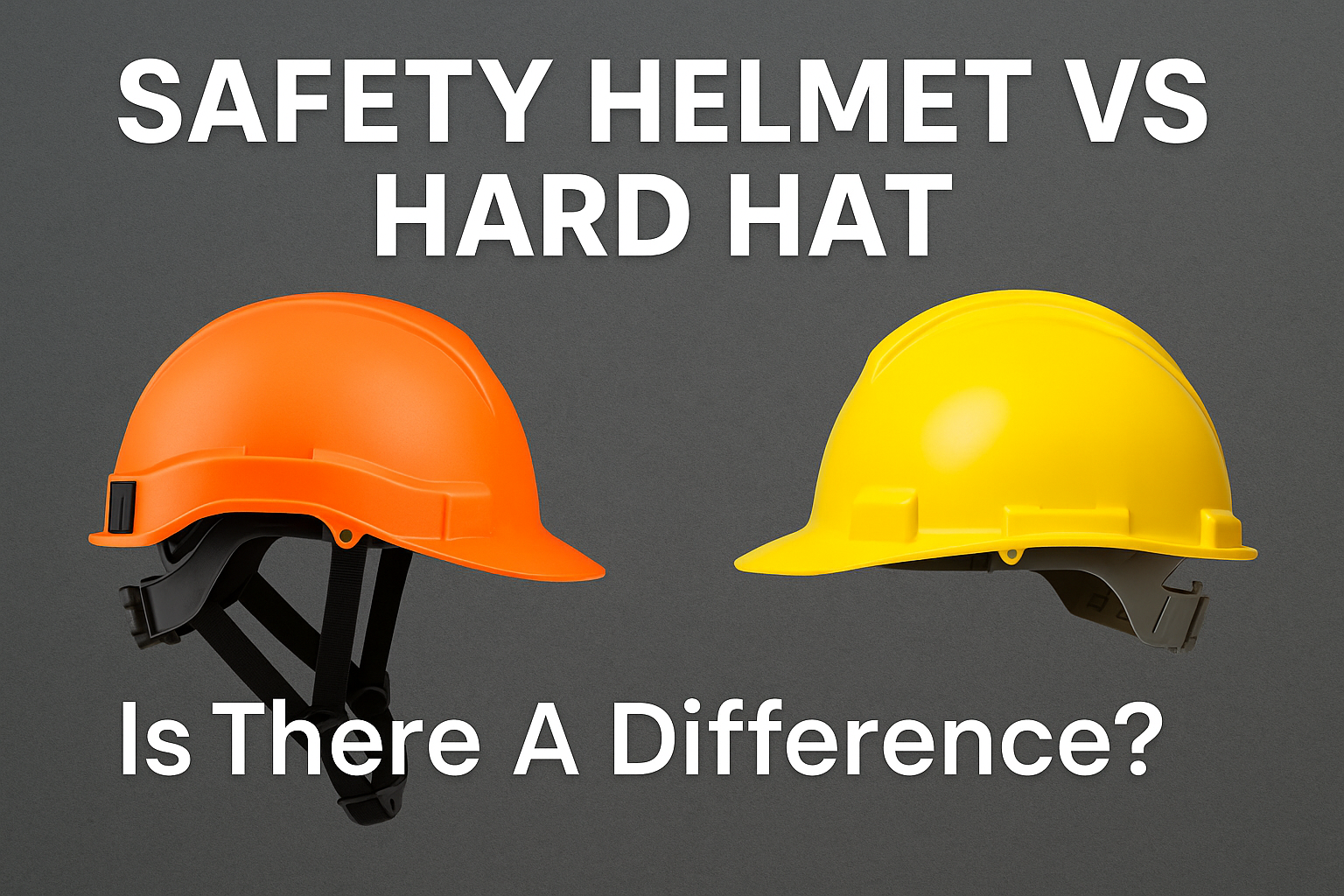
On most jobsites, people still use the terms “hard hat” and “safety helmet” like they mean the same thing. In some cases, they do. But when you start looking at Type I vs Type II protection, chin straps, side-impact protection, electrical class ratings, and newer rotational impact technologies, the difference starts to matter.
A traditional hard hat is often built mainly for top-of-head impact protection. A modern Type 2 safety helmet is designed to help protect against impacts from the top, front, back, and sides—the kind of real-world impacts that can happen during slips, trips, falls, equipment contact, or work at height.
Whether you are outfitting one worker or upgrading an entire crew, understanding the difference between a safety helmet and a hard hat can help you choose the right head protection for the job.
Looking for modern head protection options?
Explore Type 2 safety helmets and accessories, including Hardknock helmets with Nuro technology, Securis helmets with Mips® technology, Traverse helmets, chin straps, face shields, helmet lights, and replacement parts.
Shop All Type 2 Safety Helmets & Accessories
Explore Hardknock Type 2 Helmets with Nuro Technology
Explore Securis Type 2 Helmets with Mips® Technology
Want help choosing the right PPE for your team? Reach out to us here—we’re always happy to talk shop.
What’s the Real Difference in the Safety Helmet vs Hard Hat Debate?

The safety helmet vs hard hat discussion usually comes down to three things: impact protection, retention, and comfort.
Traditional hard hats are commonly Type I, meaning they are designed for impact protection to the top of the head. Type II safety helmets provide protection from impacts to both the top and sides of the head. That difference matters on modern jobsites, where workers may be exposed to side, front, rear, and angled impacts during falls, slips, trips, climbing, confined-space work, or equipment contact.
At TPR Industrial, we offer multiple head protection options because different jobs call for different protection levels. What matters most is choosing the right headgear for the hazards at hand.
Top vs Side Impact: Know the Difference
If you’re working mainly around overhead hazards, a traditional Type I hard hat may be suitable. But if side impacts are a concern—such as work at height, utility work, industrial maintenance, confined-space work, or jobsites with moving equipment—a helmet with Type II protection may be the better choice.
Need a breakdown? Check out our full guide on Type I and Type II hard hats.
Fit and Comfort: Not All Suspension Systems Are Equal

Comfort matters because if workers are wearing head protection 8–12 hours a day, it needs to fit well and stay secure.
Suspension Styles
Hard hats traditionally use a webbed suspension system. That design can provide airflow and top-impact protection, but modern safety helmets often include additional liner systems, lower-profile designs, and more secure fit systems.
Some workers still prefer the airflow and familiar feel of a traditional hard hat. Others prefer the added retention, chin strap, and side-impact coverage of a Type 2 safety helmet. That is why it is important to match the helmet to both the hazard and the crew’s comfort needs.
Chin Strap Comfort
One of the biggest advantages of many modern safety helmets is retention. Chin straps help keep the helmet on the worker’s head during slips, falls, climbing, bending, or fast movement.
If your crew works at height, around equipment, or in areas where helmets frequently get bumped loose, chin straps can make a major difference.
Safety Helmets, OSHA Guidance, and Standards You Need To Know

OSHA requires employers to provide head protection when workers are exposed to head injury hazards. You can find the full construction head protection requirements on the official OSHA site.
In plain terms, head protection must help protect workers from hazards such as impact, penetration, falling objects, and electrical exposure when applicable.
The ANSI Z89.1 standard gets more specific. It defines hard hats and safety helmets by impact type and electrical class:
- Type I – Top-only impact protection.
- Type II – Top and side impact protection.
- Class G – General protection, tested up to 2,200 volts.
- Class E – Electrical protection, tested up to 20,000 volts.
- Class C – Conductive, no electrical protection.
What About Ventilation? Are Vented Hard Hats OSHA Approved?
A lot of crews ask, “Are vented hard hats OSHA approved?” The answer is yes, as long as the helmet meets the correct ANSI Z89.1 requirements for the work being performed.
Vented helmets can be helpful in hot environments or high-exertion work, but they should not be used where electrical protection is required. For electrical hazards, crews typically need Class E non-vented head protection.
We carry both vented and non-vented options. Explore our Type 2 safety helmets and accessories to compare Class C and Class E options.
Hard Hats vs Safety Helmets in the Real World
We know there is a lot of discussion around hard hats vs safety helmets, but the truth is that both have their place. Some jobs may still call for a traditional hard hat, while other jobs are better suited for a modern Type 2 safety helmet.
Popular Features Across the Board
Whether you are wearing a hard hat or a safety helmet, look for features that match your work environment:
- Accessory slots for helmet lights and headlamps.
- Brim styles that fit your visibility and weather needs.
- Color-coded shells for jobsite role identification.
- Chin straps for improved retention.
- Face shield, earmuff, and sun protection compatibility.
Need help with role colors? Check out our hard hat color guide.
Rotational Impact Technology: Nuro and Mips®
Modern head protection is not only about direct impact. Many real-world impacts happen at an angle, which can create rotational motion. That is why some newer Type 2 safety helmets include technology designed to help manage rotational forces.
At TPR Industrial, two of the main options are:
- Hardknock Type 2 safety helmets with Nuro technology – Nuro uses a cellular structure designed to flex, compress, and glide during impact, helping manage both direct and rotational forces.
- Securis Type 2 safety helmets with Mips® technology – Mips® uses a low-friction layer designed to help reduce rotational motion that may otherwise be transferred to the head during certain angled impacts.
Both options are designed for crews looking for more advanced head protection than a traditional hard hat.
Want a deeper comparison? Read our guide: Mips® vs Nuro — Safety Helmet Technology Comparison.
Is a Helmet a Hat? Why the Wording Doesn’t Matter—But Fit Does
Technically, is a helmet a hat? Not quite. But on the jobsite, it doesn’t really matter what you call it as long as it is doing its job. What matters most is choosing the protection level, class rating, fit, and accessories that match the hazards your crew faces.
The New Hard Hat Standard
With more companies shifting toward modern head protection features like chin straps, side-impact resistance, accessory compatibility, and rotational impact technology, it is clear the industry is evolving.
Whether you are retrofitting an existing program or upgrading completely, TPR Industrial has options to match.
When Should You Consider Upgrading to a Type 2 Safety Helmet?
A Type 2 safety helmet may be a better fit when workers are exposed to more than simple overhead hazards. Common upgrade situations include:
- Work at height
- Lift and bucket work
- Construction sites with changing elevations
- Utility and electrical work
- Industrial maintenance
- Confined-space work
- Jobsites with moving equipment
- Crews where hard hats frequently fall off or get bumped loose
For many companies, the move from a traditional hard hat to a Type 2 safety helmet is not just about meeting a requirement. It is about matching the helmet to the real hazards workers face every day.
Explore options here:
Shop All Type 2 Safety Helmets & Accessories
Hardknock Type 2 Helmets with Nuro Technology
Securis Type 2 Helmets with Mips® Technology
FAQs About Safety Helmet vs Hard Hat

Is a Type 2 Safety Helmet Better Than a Traditional Hard Hat?
Not always, but a Type 2 safety helmet does offer more impact coverage.
A Type I hard hat is designed for top-of-head impact protection. A Type II safety helmet is designed for both top and side impact protection. That added coverage can make a big difference on jobsites where workers are exposed to slips, trips, falls, equipment contact, or angled impacts.
If your crew works at height, around moving equipment, in confined spaces, or in environments where a helmet could be struck from the side, front, or back, Type II protection is usually the better choice.
Does OSHA Require Safety Helmets Instead of Hard Hats?
OSHA requires employers to provide head protection when workers are exposed to head injury hazards. However, OSHA does not simply say every worker must wear a safety helmet instead of a traditional hard hat.
The key is choosing head protection that matches the hazard and complies with the applicable ANSI/ISEA Z89.1 requirements.
For example, OSHA references head protection requirements under 29 CFR 1910.135 for general industry and 29 CFR 1926.100 for construction. In many cases, a properly selected hard hat may still meet the requirement. In higher-risk applications, a Type 2 safety helmet may be the better fit.
How long do helmets and hard hats last?
Most helmets and hard hats have a recommended service life from the manufacturer, often based on date of manufacture, use, storage, and exposure conditions. If the helmet takes an impact, cracks, becomes brittle, or shows visible wear, it should be replaced immediately.
Can I customize my helmet?
Yes, but only use manufacturer-approved products. Avoid painting, drilling, or adding attachments that could weaken the material unless the product is rated to handle it.
Do I need a chin strap?
If you work at heights, around machinery, or in fast-moving environments, then yes—a chin strap can make all the difference in keeping your helmet secure during slips or impacts.
TPR Industrial: Your PPE Experts
We don’t just sell helmets—we help teams build safety cultures. TPR Industrial is trusted by pros across North America for industrial PPE, custom-fit headgear, and safety helmets that meet modern jobsite needs.
Need help with sizing, classes, or choosing between hard hats and helmets? Get in touch with our team—we’ll help you make the right call the first time.
On most jobsites, people still use the terms “hard hat” and “safety helmet” like they mean the same thing. In some cases, they do. But when you start looking at Type I vs Type II protection, chin straps, side-impact protection, electrical class ratings, and newer rotational impact technologies, the difference starts to matter.
A traditional hard hat is often built mainly for top-of-head impact protection. A modern Type 2 safety helmet is designed to help protect against impacts from the top, front, back, and sides—the kind of real-world impacts that can happen during slips, trips, falls, equipment contact, or work at height.
Whether you are outfitting one worker or upgrading an entire crew, understanding the difference between a safety helmet and a hard hat can help you choose the right head protection for the job.
Looking for modern head protection options?
Explore Type 2 safety helmets and accessories, including Hardknock helmets with Nuro technology, Securis helmets with Mips® technology, Traverse helmets, chin straps, face shields, helmet lights, and replacement parts.
Shop All Type 2 Safety Helmets & Accessories
Explore Hardknock Type 2 Helmets with Nuro Technology
Explore Securis Type 2 Helmets with Mips® Technology
Want help choosing the right PPE for your team? Reach out to us here—we’re always happy to talk shop.
What’s the Real Difference in the Safety Helmet vs Hard Hat Debate?
The safety helmet vs hard hat discussion usually comes down to three things: impact protection, retention, and comfort.
Traditional hard hats are commonly Type I, meaning they are designed for impact protection to the top of the head. Type II safety helmets provide protection from impacts to both the top and sides of the head. That difference matters on modern jobsites, where workers may be exposed to side, front, rear, and angled impacts during falls, slips, trips, climbing, confined-space work, or equipment contact.
At TPR Industrial, we offer multiple head protection options because different jobs call for different protection levels. What matters most is choosing the right headgear for the hazards at hand.
Top vs Side Impact: Know the Difference
If you’re working mainly around overhead hazards, a traditional Type I hard hat may be suitable. But if side impacts are a concern—such as work at height, utility work, industrial maintenance, confined-space work, or jobsites with moving equipment—a helmet with Type II protection may be the better choice.
Need a breakdown? Check out our full guide on Type I and Type II hard hats.
Fit and Comfort: Not All Suspension Systems Are Equal
Comfort matters because if workers are wearing head protection 8–12 hours a day, it needs to fit well and stay secure.
Suspension Styles
Hard hats traditionally use a webbed suspension system. That design can provide airflow and top-impact protection, but modern safety helmets often include additional liner systems, lower-profile designs, and more secure fit systems.
Some workers still prefer the airflow and familiar feel of a traditional hard hat. Others prefer the added retention, chin strap, and side-impact coverage of a Type 2 safety helmet. That is why it is important to match the helmet to both the hazard and the crew’s comfort needs.
Chin Strap Comfort
One of the biggest advantages of many modern safety helmets is retention. Chin straps help keep the helmet on the worker’s head during slips, falls, climbing, bending, or fast movement.
If your crew works at height, around equipment, or in areas where helmets frequently get bumped loose, chin straps can make a major difference.
Safety Helmets, OSHA Guidance, and Standards You Need To Know
OSHA requires employers to provide head protection when workers are exposed to head injury hazards. You can find the full construction head protection requirements on the official OSHA site.
In plain terms, head protection must help protect workers from hazards such as impact, penetration, falling objects, and electrical exposure when applicable.
The ANSI Z89.1 standard gets more specific. It defines hard hats and safety helmets by impact type and electrical class:
- Type I – Top-only impact protection.
- Type II – Top and side impact protection.
- Class G – General protection, tested up to 2,200 volts.
- Class E – Electrical protection, tested up to 20,000 volts.
- Class C – Conductive, no electrical protection.
What About Ventilation? Are Vented Hard Hats OSHA Approved?
A lot of crews ask, “Are vented hard hats OSHA approved?” The answer is yes, as long as the helmet meets the correct ANSI Z89.1 requirements for the work being performed.
Vented helmets can be helpful in hot environments or high-exertion work, but they should not be used where electrical protection is required. For electrical hazards, crews typically need Class E non-vented head protection.
We carry both vented and non-vented options. Explore our Type 2 safety helmets and accessories to compare Class C and Class E options.
Hard Hats vs Safety Helmets in the Real World
We know there is a lot of discussion around hard hats vs safety helmets, but the truth is that both have their place. Some jobs may still call for a traditional hard hat, while other jobs are better suited for a modern Type 2 safety helmet.
Popular Features Across the Board
Whether you are wearing a hard hat or a safety helmet, look for features that match your work environment:
- Accessory slots for helmet lights and headlamps.
- Brim styles that fit your visibility and weather needs.
- Color-coded shells for jobsite role identification.
- Chin straps for improved retention.
- Face shield, earmuff, and sun protection compatibility.
Need help with role colors? Check out our hard hat color guide.
Rotational Impact Technology: Nuro and Mips®
Modern head protection is not only about direct impact. Many real-world impacts happen at an angle, which can create rotational motion. That is why some newer Type 2 safety helmets include technology designed to help manage rotational forces.
At TPR Industrial, two of the main options are:
- Hardknock Type 2 safety helmets with Nuro technology – Nuro uses a cellular structure designed to flex, compress, and glide during impact, helping manage both direct and rotational forces.
- Securis Type 2 safety helmets with Mips® technology – Mips® uses a low-friction layer designed to help reduce rotational motion that may otherwise be transferred to the head during certain angled impacts.
Both options are designed for crews looking for more advanced head protection than a traditional hard hat.
Want a deeper comparison? Read our guide: Mips® vs Nuro — Safety Helmet Technology Comparison.
Is a Helmet a Hat? Why the Wording Doesn’t Matter—But Fit Does
Technically, is a helmet a hat? Not quite. But on the jobsite, it doesn’t really matter what you call it as long as it is doing its job. What matters most is choosing the protection level, class rating, fit, and accessories that match the hazards your crew faces.
The New Hard Hat Standard
With more companies shifting toward modern head protection features like chin straps, side-impact resistance, accessory compatibility, and rotational impact technology, it is clear the industry is evolving.
Whether you are retrofitting an existing program or upgrading completely, TPR Industrial has options to match.
When Should You Consider Upgrading to a Type 2 Safety Helmet?
A Type 2 safety helmet may be a better fit when workers are exposed to more than simple overhead hazards. Common upgrade situations include:
- Work at height
- Lift and bucket work
- Construction sites with changing elevations
- Utility and electrical work
- Industrial maintenance
- Confined-space work
- Jobsites with moving equipment
- Crews where hard hats frequently fall off or get bumped loose
For many companies, the move from a traditional hard hat to a Type 2 safety helmet is not just about meeting a requirement. It is about matching the helmet to the real hazards workers face every day.
Explore options here:
Shop All Type 2 Safety Helmets & Accessories
Hardknock Type 2 Helmets with Nuro Technology
Securis Type 2 Helmets with Mips® Technology
FAQs About Safety Helmet vs Hard Hat
Is a Type 2 Safety Helmet Better Than a Traditional Hard Hat?
Not always, but a Type 2 safety helmet does offer more impact coverage.
A Type I hard hat is designed for top-of-head impact protection. A Type II safety helmet is designed for both top and side impact protection. That added coverage can make a big difference on jobsites where workers are exposed to slips, trips, falls, equipment contact, or angled impacts.
If your crew works at height, around moving equipment, in confined spaces, or in environments where a helmet could be struck from the side, front, or back, Type II protection is usually the better choice.
Does OSHA Require Safety Helmets Instead of Hard Hats?
OSHA requires employers to provide head protection when workers are exposed to head injury hazards. However, OSHA does not simply say every worker must wear a safety helmet instead of a traditional hard hat.
The key is choosing head protection that matches the hazard and complies with the applicable ANSI/ISEA Z89.1 requirements.
For example, OSHA references head protection requirements under 29 CFR 1910.135 for general industry and 29 CFR 1926.100 for construction. In many cases, a properly selected hard hat may still meet the requirement. In higher-risk applications, a Type 2 safety helmet may be the better fit.
How long do helmets and hard hats last?
Most helmets and hard hats have a recommended service life from the manufacturer, often based on date of manufacture, use, storage, and exposure conditions. If the helmet takes an impact, cracks, becomes brittle, or shows visible wear, it should be replaced immediately.
Can I customize my helmet?
Yes, but only use manufacturer-approved products. Avoid painting, drilling, or adding attachments that could weaken the material unless the product is rated to handle it.
Do I need a chin strap?
If you work at heights, around machinery, or in fast-moving environments, then yes—a chin strap can make all the difference in keeping your helmet secure during slips or impacts.
TPR Industrial: Your PPE Experts
We don’t just sell helmets—we help teams build safety cultures. TPR Industrial is trusted by pros across North America for industrial PPE, custom-fit headgear, and safety helmets that meet modern jobsite needs.
Need help with sizing, classes, or choosing between hard hats and helmets? Get in touch with our team—we’ll help you make the right call the first time.
