 English
 Español

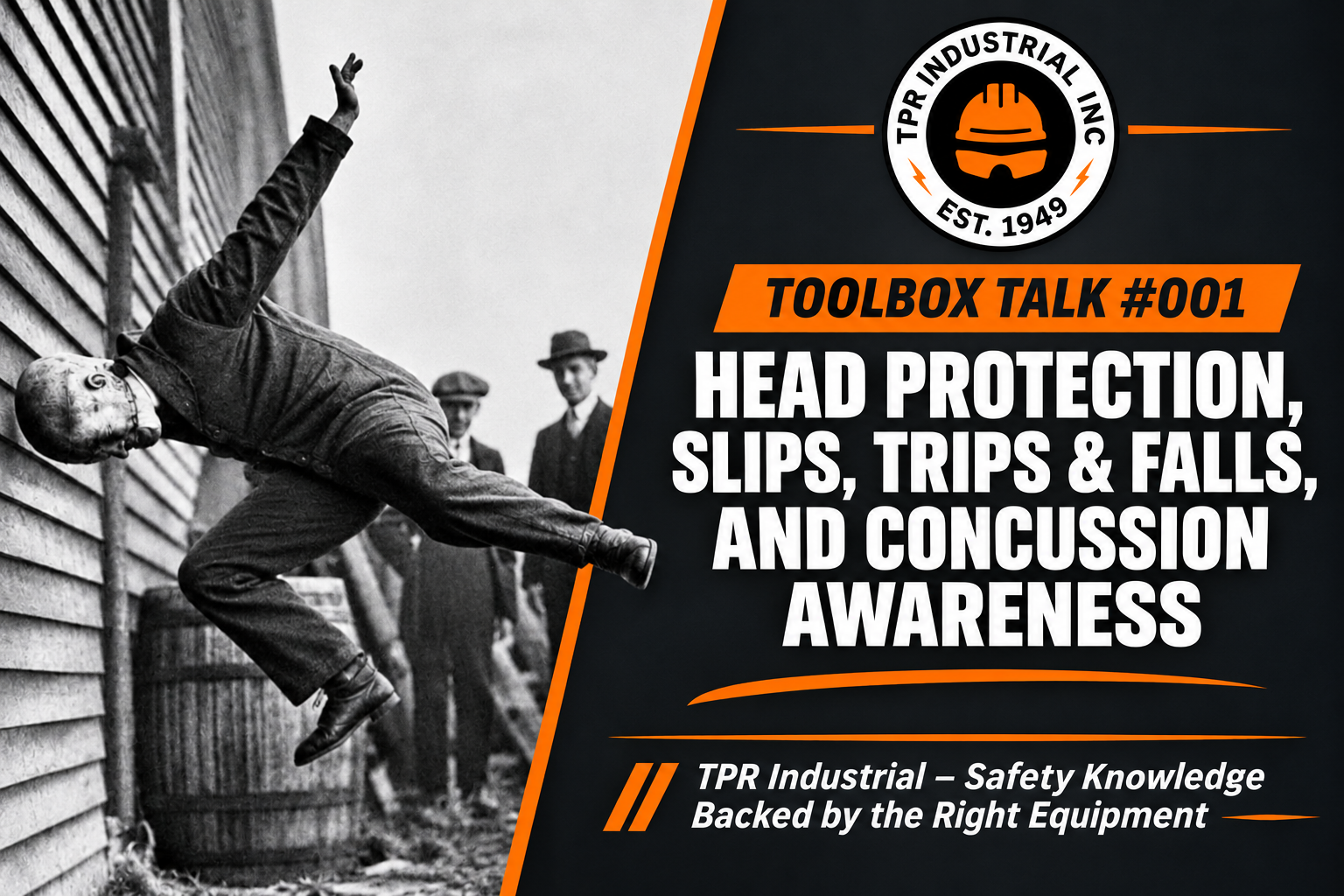
TPR INDUSTRIAL • TOOLBOX TALK #001
What Causes a Concussion?
Understanding the brain, what happens during a head impact, and how modern safety helmets can help.
10–15 minute toolbox talk | Construction & industrial safety
WHY THIS MATTERS
Slips, Trips & Falls Can Lead to Serious Head Injuries
Falls are a major cause of traumatic brain injuries in construction. A concussion can occur after a ground-level fall, a fall from height, or a struck-by incident — even without a skull fracture.
|
25% Of construction fatalities involved traumatic brain injuries. United States, 2003–2010 |
57% Of fatal construction-related traumatic brain injuries involved falls. United States, 2003–2010 |
Historical research figures, not current annual rates. Source: Konda and colleagues, 2016 .
PART 1 • THE BRAIN
How Is Your Brain Protected Inside Your Skull?
Your skull is a protective outer shell. Inside, the brain is surrounded by protective membranes and cerebrospinal fluid. These structures help cushion the brain, but they cannot eliminate the forces produced by a sudden impact.
Ask: If a helmet protects the skull from fracture, does that guarantee the brain is unharmed? No.
PART 2 • THE IMPACT
What Happens When Your Head Takes a Hit?
Watch these demonstrations. They help explain why head movement during an impact matters — not just whether the skull breaks.
Watch: The Nuro “Egg Effect”
Video not playing? Watch on YouTube
The egg offers a simple illustration of how sudden movement can affect the contents of a protective shell. It is not a literal model of every brain injury mechanism.
Watch: Slow-Motion Boxer

Watch the boxer's head, not the punch.
Notice how quickly his head accelerates and rotates. Similar forces can occur when a construction worker slips, trips, falls, or strikes their head against equipment.
Linear acceleration involves changes in straight-line motion. Rotational acceleration involves changes in turning motion. Both can contribute to brain injury; rotation can create shear strain in brain tissue.
PART 3 • THE PROTECTION
How Can We Reduce Head Injury Risk?
Prevent the incident first: control fall hazards, secure materials, maintain walking surfaces, and keep workers clear of moving equipment. Then select head protection based on the jobsite hazard assessment.
ANSI Type I
Tested primarily for impacts to the top of the head.
ANSI Type II
Tested for both top and lateral impacts, including the front, back, and sides.
Important: Type II classification does not mean a helmet is concussion-proof or establish its performance against rotational acceleration. Confirm the appropriate electrical class, fit, and manufacturer instructions.
Why Chinstraps Matter
A properly fitted chinstrap helps keep a safety helmet securely positioned during slips, trips, falls, and sudden head movements.
Even a high-performance helmet cannot provide its intended protection if it becomes dislodged before an impact.
Before starting work, check that the chinstrap is free from damage, properly adjusted, and fastened when required. Follow the helmet manufacturer's instructions and your jobsite's head protection requirements.
Ask the crew: What could happen if your safety helmet comes off during a fall?
Chinstrap requirements vary by helmet design, manufacturer instructions, workplace hazards, and site policy.
Modern Impact-Management Technologies
Hardknock + Nuro
Hardknock helmets incorporate Nuro cellular technology designed to help manage impact energy during certain impacts.
Explore Hardknock HelmetsSecuris + Mips
Selected Securis helmets incorporate a Mips low-friction system designed to allow controlled movement during certain angled impacts.
Explore Securis HelmetsWatch: Securis / Mips Demonstration
TAKE IT TO THE JOBSITE
Five Questions for Your Crew
- Can a concussion occur without a skull fracture?
- What is the difference between linear and rotational head movement?
- Where could head impacts occur on this jobsite?
- What hazards should guide helmet and electrical-class selection?
- What should you do if a coworker may have a concussion?
If You Suspect a Concussion
Recognize: Headache, confusion, nausea, dizziness, or changes in balance or vision.
Respond: Stop hazardous work, notify a supervisor, and arrange prompt medical evaluation.
Emergency: Call 911 for seizures, repeated vomiting, worsening headache, weakness, slurred speech, or difficulty waking the person.
For the Toolbox Talk Leader
Play the demonstrations, ask what workers noticed, and finish by identifying one practical way to reduce head-impact risk on today's job.
Resources: OSHA: Safety Helmets in the Workplace | CDC: Concussion Symptoms
Training background: Michael Bottlang, PhD, Brain Injury Prevention: Myths and Facts (WaveCel presentation). This educational resource does not replace site-specific hazard assessment, required training, medical evaluation, or helmet manufacturer instructions.
TPR INDUSTRIAL
Safety Equipment Since 1949 • Safety Knowledge Backed by the Right Equipment
TPR INDUSTRIAL • TOOLBOX TALK #001
What Causes a Concussion?
Understanding the brain, what happens during a head impact, and how modern safety helmets can help.
10–15 minute toolbox talk | Construction & industrial safety
WHY THIS MATTERS
Slips, Trips & Falls Can Lead to Serious Head Injuries
Falls are a major cause of traumatic brain injuries in construction. A concussion can occur after a ground-level fall, a fall from height, or a struck-by incident — even without a skull fracture.
|
25% Of construction fatalities involved traumatic brain injuries. United States, 2003–2010 |
57% Of fatal construction-related traumatic brain injuries involved falls. United States, 2003–2010 |
Historical research figures, not current annual rates. Source: Konda and colleagues, 2016 .
PART 1 • THE BRAIN
How Is Your Brain Protected Inside Your Skull?
Your skull is a protective outer shell. Inside, the brain is surrounded by protective membranes and cerebrospinal fluid. These structures help cushion the brain, but they cannot eliminate the forces produced by a sudden impact.
Ask: If a helmet protects the skull from fracture, does that guarantee the brain is unharmed? No.
PART 2 • THE IMPACT
What Happens When Your Head Takes a Hit?
Watch these demonstrations. They help explain why head movement during an impact matters — not just whether the skull breaks.
Watch: The Nuro “Egg Effect”
Video not playing? Watch on YouTube
The egg offers a simple illustration of how sudden movement can affect the contents of a protective shell. It is not a literal model of every brain injury mechanism.
Watch: Slow-Motion Boxer
Watch the boxer's head, not the punch.
Notice how quickly his head accelerates and rotates. Similar forces can occur when a construction worker slips, trips, falls, or strikes their head against equipment.
Linear acceleration involves changes in straight-line motion. Rotational acceleration involves changes in turning motion. Both can contribute to brain injury; rotation can create shear strain in brain tissue.
PART 3 • THE PROTECTION
How Can We Reduce Head Injury Risk?
Prevent the incident first: control fall hazards, secure materials, maintain walking surfaces, and keep workers clear of moving equipment. Then select head protection based on the jobsite hazard assessment.
ANSI Type I
Tested primarily for impacts to the top of the head.
ANSI Type II
Tested for both top and lateral impacts, including the front, back, and sides.
Important: Type II classification does not mean a helmet is concussion-proof or establish its performance against rotational acceleration. Confirm the appropriate electrical class, fit, and manufacturer instructions.
Why Chinstraps Matter
A properly fitted chinstrap helps keep a safety helmet securely positioned during slips, trips, falls, and sudden head movements.
Even a high-performance helmet cannot provide its intended protection if it becomes dislodged before an impact.
Before starting work, check that the chinstrap is free from damage, properly adjusted, and fastened when required. Follow the helmet manufacturer's instructions and your jobsite's head protection requirements.
Ask the crew: What could happen if your safety helmet comes off during a fall?
Chinstrap requirements vary by helmet design, manufacturer instructions, workplace hazards, and site policy.
Modern Impact-Management Technologies
Hardknock + Nuro
Hardknock helmets incorporate Nuro cellular technology designed to help manage impact energy during certain impacts.
Explore Hardknock HelmetsSecuris + Mips
Selected Securis helmets incorporate a Mips low-friction system designed to allow controlled movement during certain angled impacts.
Explore Securis HelmetsWatch: Securis / Mips Demonstration
TAKE IT TO THE JOBSITE
Five Questions for Your Crew
- Can a concussion occur without a skull fracture?
- What is the difference between linear and rotational head movement?
- Where could head impacts occur on this jobsite?
- What hazards should guide helmet and electrical-class selection?
- What should you do if a coworker may have a concussion?
If You Suspect a Concussion
Recognize: Headache, confusion, nausea, dizziness, or changes in balance or vision.
Respond: Stop hazardous work, notify a supervisor, and arrange prompt medical evaluation.
Emergency: Call 911 for seizures, repeated vomiting, worsening headache, weakness, slurred speech, or difficulty waking the person.
For the Toolbox Talk Leader
Play the demonstrations, ask what workers noticed, and finish by identifying one practical way to reduce head-impact risk on today's job.
Resources: OSHA: Safety Helmets in the Workplace | CDC: Concussion Symptoms
Training background: Michael Bottlang, PhD, Brain Injury Prevention: Myths and Facts (WaveCel presentation). This educational resource does not replace site-specific hazard assessment, required training, medical evaluation, or helmet manufacturer instructions.
TPR INDUSTRIAL
Safety Equipment Since 1949 • Safety Knowledge Backed by the Right Equipment
